Pulmonology has never been just about diagnosing disease. It is about understanding why a patient feels breathless, where airflow begins to fail, and how early subtle changes can be detected before symptoms spiral. Yet many clinics still rely on tools that demand patient effort and offer limited insight into airway mechanics.
This is where the shift begins. Clinicians across advanced respiratory practices are reassessing their diagnostic flow. More pulmonologists are recognising that certain clinical gaps cannot be addressed by spirometry alone. That is why the FOT machine for pulmonologists is steadily becoming part of modern clinic setups, not as a replacement, but as a necessary extension of lung assessment.
Below are five clinically meaningful reasons driving this change.
1. Spirometry shows outcomes. FOT shows behaviour.
Spirometry tells you how much air moves and how fast. It does not explain how the airways are behaving during quiet breathing. This distinction matters, especially in patients whose symptoms do not align with spirometry results.
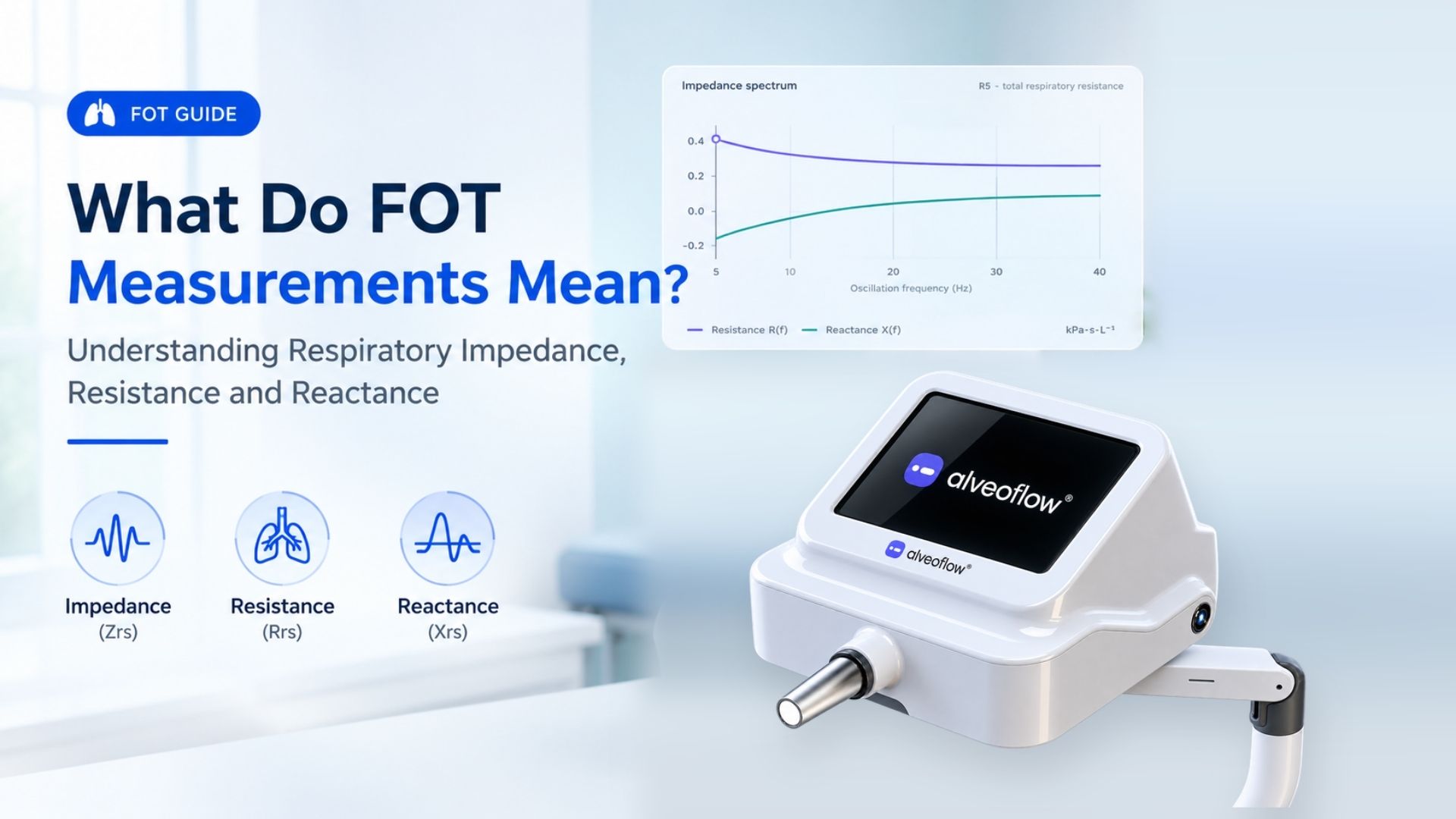
An FOT machine for pulmonologists evaluates airway resistance and reactance while the patient breathes normally. This reveals whether the airways are stiff, narrowed, or unstable beneath the surface. It allows clinicians to see mechanical dysfunction before volume changes become obvious.
This insight fills a long-standing diagnostic blind spot for pulmonologists who manage asthma, early COPD, or post-infectious breathlessness.
2. Effort-dependent testing limits clinical accuracy
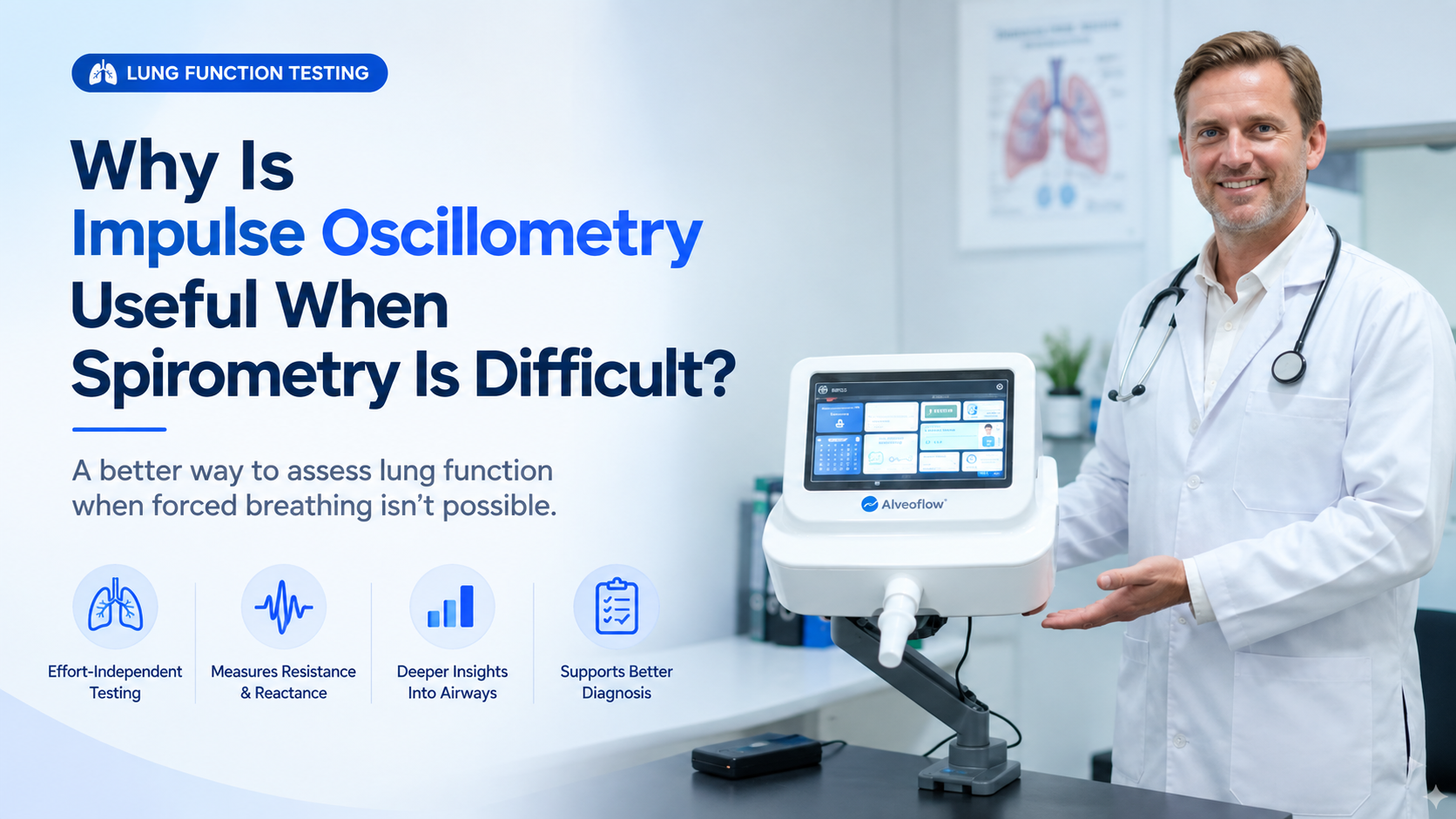
Many patients struggle with forced breathing tests. Elderly adults, children, post-COVID patients, and those with neuromuscular weakness often fail spirometry. This does not happen because the disease is absent, but because the test demands too much from the patients.
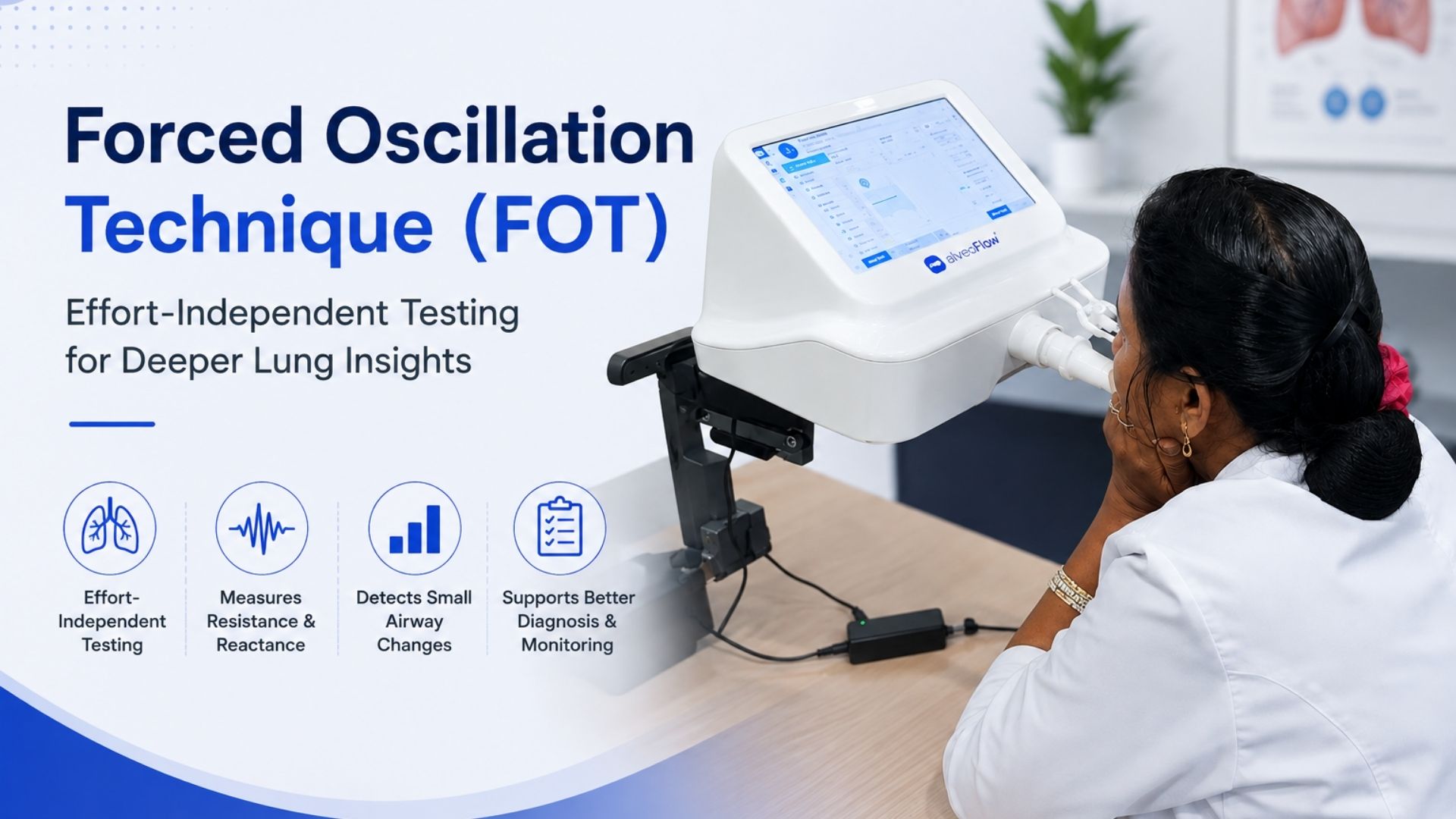
The FOT machine for pulmonologists removes effort from the equation. The patient breathes quietly. The data remains reliable. This creates consistency across patient groups and reduces test variability caused by technique or fatigue.
In fact, clinics adopting this approach often notice fewer inconclusive reports and stronger confidence in clinical interpretation.
3. Small airway disease no longer stays hidden
Small airway dysfunction develops early and progresses quietly. By the time spirometry turns abnormal, disease has often advanced beyond the subtle stage where intervention has the greatest impact.
This is where the FOT machine for pulmonologists changes the timeline. Oscillatory measurements highlight peripheral airway involvement long before forced expiratory values decline. This allows pulmonologists to intervene earlier, refine treatment plans, and monitor progression with greater sensitivity.
This early visibility is a decisive advantage for clinics focused on preventive respiratory care.
4. Symptom–test mismatch becomes easier to explain
There are only a few situations that frustrate patients more than being told their tests are “normal” while breathlessness persists. This mismatch erodes trust and complicates follow-up care.
An FOT machine for pulmonologists helps bridge that gap. It does so by showing changes in airway mechanics that spirometry may miss. This helps clinicians gain objective data to explain symptoms clearly. When that happens, patients feel heard, treatment discussions become more grounded, and care becomes collaborative instead of confusing.
This clarity improves patient confidence and strengthens long-term engagement with care plans.
5. Modern pulmonology is moving toward trend-based monitoring
Pulmonary care is no longer episodic. It is longitudinal. Today, clinicians are increasingly tracking how airway behaviour evolves over time rather than reacting to isolated snapshots.
The FOT machine for pulmonologists supports this shift. Repeated measurements allow clinicians to observe how resistance and reactance respond to medication changes, infections, or recovery phases. This makes treatment adjustment proactive rather than reactive.
FOT machines will prove instrumental if you are a clinician aiming to modernise your diagnostic workflow. This trend-based approach is known to perfectly align with where respiratory medicine is headed.
Conclusion
The decision to add an FOT machine is not about adopting new technology for its own sake. It is about addressing real clinical limitations that pulmonologists encounter every day. FOT machine for pulmonologists offers insights that traditional tools cannot provide alone. It helps with everything from effort-independent testing to early detection of small airway changes.
As clinics seek deeper understanding, clearer explanations, and more confident decision-making, FOT is becoming a natural extension of pulmonary assessment. Solutions like alveoflow by alveofit are designed with this clinical reality in mind. They combine oscillometry with intuitive design, supporting accurate evaluation in both clinic-based and structured monitoring settings.
If you are considering how to strengthen diagnostic clarity and future-proof your respiratory practice, exploring alveofit’s FOT solutions is a meaningful next step.