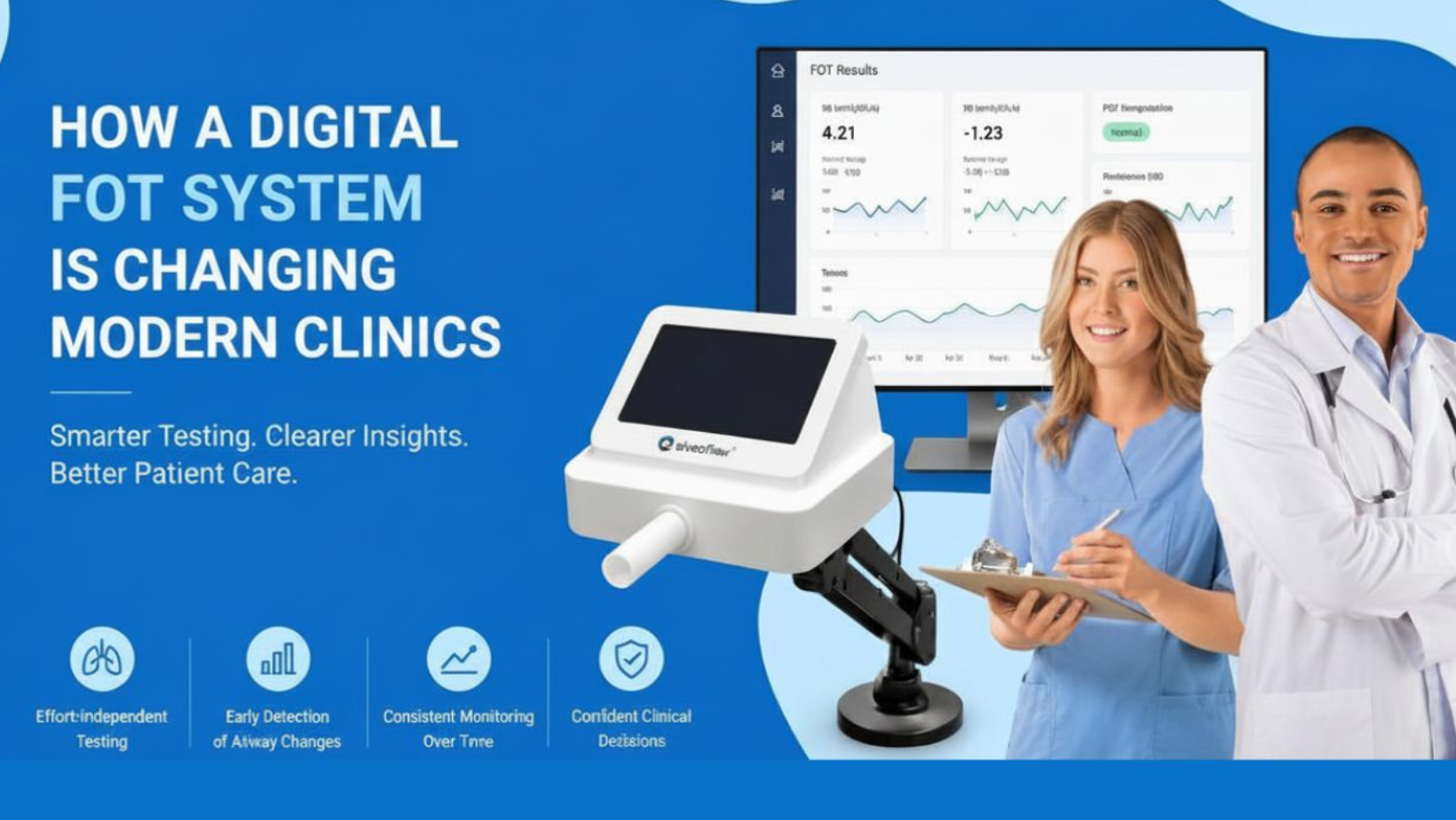
Modern clinics are beginning to rethink how respiratory assessment fits into everyday practice. The focus is no longer limited to running tests. It is shifting toward obtaining consistent, reliable insights that can support better decisions over time. This shift is being driven, in part, by the adoption of digital FOT systems in clinics.
These systems are changing how lung function is measured, interpreted, and monitored. As a result, clinics are not just using a new tool. They are building a more consistent and responsive approach to respiratory care. But what does this change actually look like in day-to-day clinical practice?
1. Clinics Are Moving Beyond Effort-Dependent Testing
Traditional spirometry relies on active participation from the patient. While using the device, the patient is expected to inhale deeply and then exhale with a controlled force and timing. The quality of the result, therefore, does not just depend on lung function. It also depends on how accurately this process is performed.
This is where variability begins to appear in real clinical settings. Not every patient is able to repeat this effort consistently. Moreover, even small differences in technique can influence the readings.
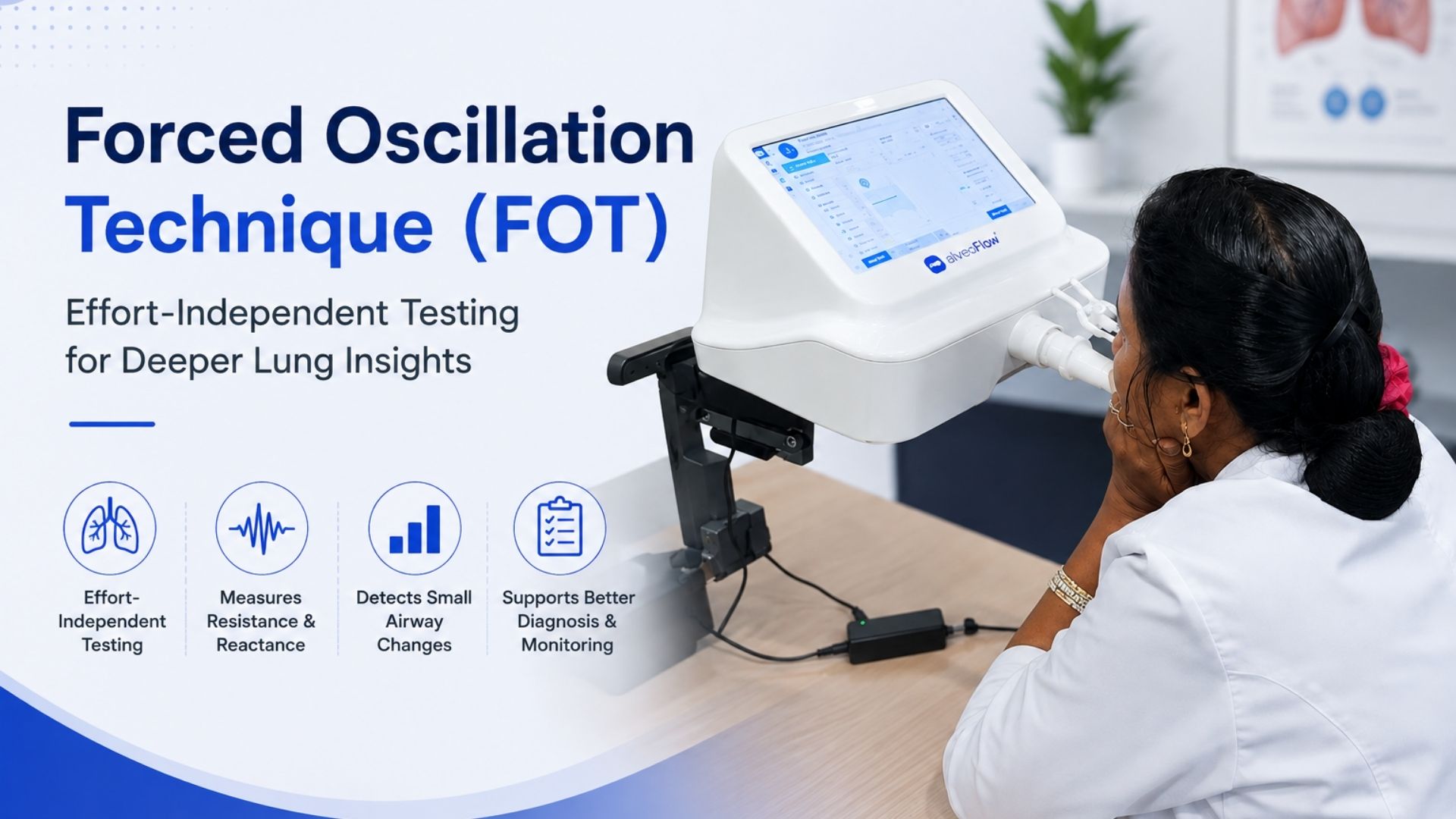
A digital FOT system for clinics approaches this differently. Instead of depending on how the patient performs, it works with how the patient breathes naturally. The test does not require force or coordination. The patient simply breathes in a calm and steady manner, while the system captures how the airways respond in real time.
This shift brings a noticeable improvement in how results are obtained and interpreted:
- Greater consistency across different patient groups
- More reliable readings in routine clinical practice
- Increased confidence when interpreting results, especially in cases where effort may be inconsistent
The focus here moves away from performance and toward observation. This empowers clinicians to understand how the lungs behave without the limitations of effort-dependent testing.
2. FOT Device Is Bringing Clarity to Early and Uncertain Cases
One of the most meaningful contributions of a digital FOT system for clinics is the clarity it brings to early or uncertain respiratory symptoms.
Symptoms in many patients begin to appear before measurable changes are visible on spirometry. Patients may notice:
- Mild breathlessness,
- occasional chest tightness, or
- Reduced tolerance to activity may feel noticeable.
However, traditional test values may not often provide reliable results during the initial stages of respiratory issues. Tests, when taken, may often remain within normal limits. This creates a disconnect between what the patient experiences and what the data reflects.
A digital FOT system helps close this gap by capturing subtle changes in airway resistance and elasticity. These changes often begin in the smaller airways, where early dysfunction is harder to detect through effort-based testing. However, digital FOT systems are designed to capture these changes. This allows clinicians to:
- Identify changes at an earlier stage
- Understand symptoms that may otherwise seem inconsistent
- Make more informed decisions without waiting for clear deterioration
3. FOT Systems Are Strengthening Chronic Disease Monitoring
Modern clinics are not just focused on diagnosing respiratory conditions. They are equally responsible for managing them over time.
Chronic diseases such as asthma and COPD are problems that require such management. They need consistent and reliable monitoring. However, traditional testing methods often introduce variability. This means the results can be influenced by patient effort, fatigue, or technique during each visit.
A digital FOT system for clinics offers a more stable and dependable approach. The test does not rely on forced breathing. Hence, it produces data that is less affected by how the patient performs on a given day.
This leads to:
- More consistent results across multiple visits
- Clearer identification of trends over time
- Better visibility of small but meaningful changes
This level of consistency helps clinicians a lot. It ensures they are better equipped to track disease progression and evaluate treatment response with greater clarity and confidence.
4. Clinics Are Making More Confident Clinical Decisions
The impact of a digital FOT system for clinics goes beyond testing alone. It begins to shape how clinical decisions are made in everyday practice.
Interpretation becomes more straightforward when the data is consistent and less influenced by patient performance. This means clinicians no longer need to separate true lung behaviour from variations in effort. Instead, they can:
- Interpret results with greater confidence
- Reduce uncertainty in borderline or unclear cases
- Respond earlier to subtle changes in airway function
Over time, this shifts the overall approach to respiratory care. Decisions are no longer based only on isolated readings. They are guided by consistent patterns and a clearer understanding of how the lungs are behaving across visits.
Conclusion
The introduction of a digital FOT system for clinics is not just a technological upgrade. It represents a shift in how respiratory function is understood and assessed in everyday practice.
It brings consistency to testing and clarity to interpretation. It also supports earlier detection, better monitoring, and more reliable decision-making across a wider range of patients.
Solutions like alveoflow are designed to support this transition. Our FOT system is known for precise, effort-independent assessment and digitally structured insights. It enables clinics to move toward more confident and responsive respiratory care.