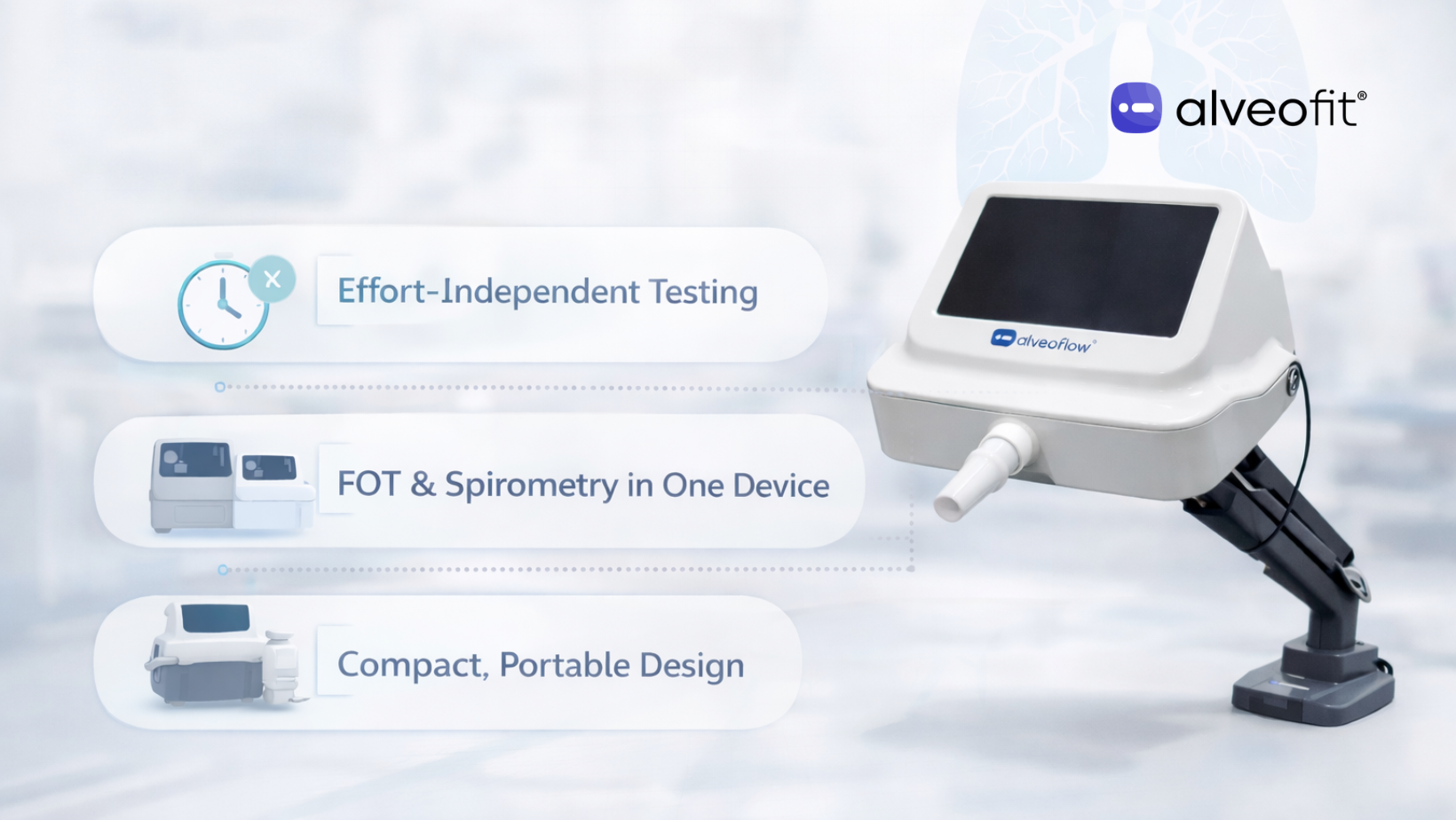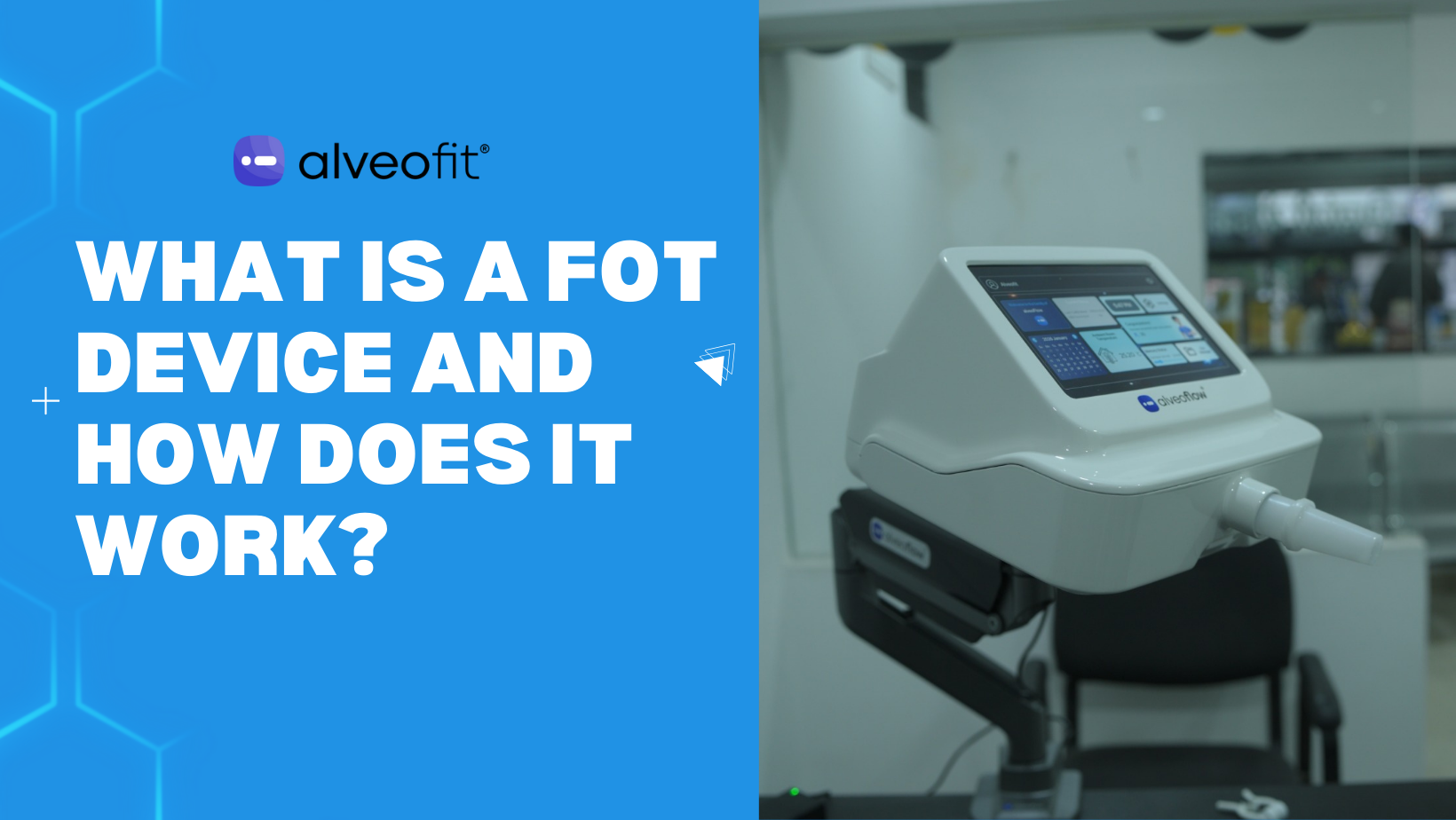
Traditional breathing tests rely heavily on patient effort. Yet many patients, from children to elderly adults, struggle with those tests. This is where FOT devices for clinics are changing how lung health is assessed. They allow doctors to understand airway behaviour while a patient simply breathes normally.
If you are curious about how this technology works and why clinics trust it for deeper respiratory insight, this article walks you through everything you need to know.
What Is an FOT Device?
An FOT device is designed to understand how the lungs are behaving while a person breathes normally. There is no deep inhaling. There is no forceful blowing. The patient simply breathes in and out, and the device quietly does the rest.
What happens next is what makes this technology so insightful. Instead of forcing the lungs to perform, the FOT system gently interacts with them and listens to how they respond. In a way, it has a quiet conversation with the airways while they are at rest, allowing clinicians to see how the lungs behave in their most natural state.
Then the process unfolds in a few simple steps:
- A FOT device works by sending very gentle pressure waves into the airways during normal breathing.
- These waves are not felt by the patient. They travel through the lungs and return with valuable information about how open, flexible, and responsive the airways really are.
- The device then measures how much resistance those waves face and how the lung tissue reacts to them.
- From this, clinicians can see whether the airways are relaxed, narrowed, stiff, or struggling to respond properly.
This is what makes an FOT device for clinics so powerful. It does not depend on how hard a patient can blow or how well they can follow instructions. It captures what the lungs are doing naturally, which often reveals problems that forced breathing tests can miss.
Many issues, such as small airway changes, early obstruction, and subtle shifts in lung mechanics, become much easier to identify with an FOT device for clinics. The best part, it can often be detected even before symptoms become more obvious.
How Does A FOT Device For Clinics Really Work?
The test from an FOT device may seem simple on the surface. Yet inside the device, a much deeper analysis is about to begin. This is where a FOT device for clinics turns raw signals into insights that help doctors understand what is happening inside the airways.
- The FOT device for clinics compares the incoming and outgoing pressure signals to see how much energy is lost as air moves through the lungs.
- From this comparison, it calculates something called respiratory impedance. This actually describes how the lungs resist and respond to airflow.
- Impedance is then separated into two values. One (R) reflects how much the airways resist airflow. The other (X) reflects how elastic or stiff the lung tissue is.
- These values are measured across multiple frequencies, not just one. This allows clinicians to see how different parts of the airway behave.
- Lower frequencies show how the entire breathing system is working together.
- Higher frequencies highlight changes in the larger, central airways.
- The final report displays these patterns in a way that helps clinicians identify obstruction, stiffness, or early small-airway disease.
This layered output is what makes a FOT device for clinics so valuable. It does not just confirm that something is wrong. It shows where the problem is starting and how the lungs are responding beneath the surface.
Key parameters You Shall See On FOT Device For Clinics
When a FOT test is completed, it does not just produce a single result. It creates a set of numbers that describes how the airways and lung tissue are behaving at different levels. Each parameter looks at a slightly different aspect of breathing. Together, they help clinicians understand whether resistance is building, elasticity is changing, or smaller airways are beginning to struggle.
If you have ever looked at a FOT report and wondered what those letters and numbers actually mean, here is a simple way to understand them.
- R5 (Resistance at 5 Hz): This value represents total airway resistance. It reflects how much opposition airflow faces across both large and small airways combined.
- R20 (Resistance at 20 Hz): This value focuses more on the central airways. When R20 is elevated, it often points toward resistance in the larger bronchial passages.
- R5–R20 (Small airway index): The difference between R5 and R20 helps highlight small airway involvement. A larger gap suggests that resistance is coming from deeper, peripheral airways rather than central ones.
- X5 (Reactance at 5 Hz): This parameter reflects how elastic the lung tissue is. More negative values indicate reduced elastic recoil or early peripheral airway obstruction.
- AX (Area of reactance): AX summarises overall reactance abnormalities. Higher values often indicate increased stiffness or dysfunction in the small airways.
- Fres (Resonant frequency): This is the point where resistance and elasticity balance out. A higher Fres typically suggests worsening small airway function.
Together, these parameters form the backbone of FOT interpretation. A doctor using FOT device for clinics can track how these parameters change over time. They also compare pre- and post-bronchodilator results and detect early airway involvement long before symptoms become obvious.
Conclusion
An FOT device gives clinics a clearer and more natural view of how the lungs are working. It allows doctors to see resistance, stiffness, and early airway changes without forcing the patient to perform difficult breathing tasks. This makes it especially valuable for detecting subtle problems, tracking disease progression, and guiding treatment with more precision.
As interest in gentle, accurate lung monitoring grows, solutions from alveofit are becoming increasingly popular with both clinicians and people who want reliable tracking at home. Are you looking for advanced respiratory monitoring that blends clinical accuracy with everyday ease? alveofit offers powerful options designed to support better breathing at every stage. Explore our products today!