Have you ever heard a clinician mention the Forced Expiratory Technique and felt unsure about what it actually does for the lungs? Many people associate airway clearance with strong coughing, yet that approach is not always effective or gentle on healing airways.
The Forced Expiratory Technique exists for situations where mucus needs to move, but the lungs cannot afford stress. This article explains why FET is used, what it achieves inside the lungs, and how it is performed correctly.
Why the Forced Expiratory Technique Is Used?
When mucus builds up inside the lungs, breathing does not feel the same anymore. The chest starts to feel heavy. Air does not move as freely. Even simple breathing can begin to feel effortful.
This happens because mucus often settles deep inside the smaller airways. Normal breathing is not strong enough to move it. At the same time, repeated forceful coughing can be exhausting and may still fail to clear the blockage properly. Over time, this trapped mucus increases irritation, slows recovery, and raises the risk of repeated chest infections.
This is the exact problem the Forced Expiratory Technique is designed to address.
What FET Achieves for the Lungs?
When practised correctly, the Forced Expiratory Technique supports lung health in a few clear and meaningful ways.
- It helps move mucus from the deeper, peripheral airways into larger passages, where clearing it becomes easier and far less tiring.
- It reduces the need for repeated, forceful coughing. It protects sensitive airways and prevents unnecessary strain on the chest muscles.
- It improves airflow by clearing mucus plugs that interfere with smooth breathing. It allows air to move more freely through the lungs.
Over time, these changes make breathing feel lighter and more controlled. As mucus clearance improves, breathing begins to feel lighter and more comfortable. Airflow improves. Chest congestion reduces. Recovery becomes smoother, especially for people dealing with chest infections, prolonged cough, or ongoing mucus buildup.
In clinical settings, these improvements are often easier to observe and track when FET is assessed alongside objective tools such as a FOT system with spirometer. This helps clinicians understand how airway resistance and response evolve with consistent technique use.
Why do clinicians choose FET?
FET is chosen because it is:
- Effective at mobilising secretions without aggressive coughing.
- Gentle on the lungs and chest muscles.
- Easy to teach and to repeat at home.
These qualities make FET especially useful for children, older adults, and people recovering from lung infections. When paired with objective assessment tools such as an FOT system with a spirometer, clinicians can also observe how airway mechanics respond to the technique, helping them tailor care with greater confidence.
How the Forced Expiratory Technique Actually Works?
The Forced Expiratory Technique is a short, guided sequence that helps shift mucus gradually from deeper airways to areas where it can be cleared more easily. FET adjusts how air moves out of the lungs, creating enough pressure to loosen mucus without irritating the airways.
Here is how the technique is usually performed:
- Sit upright or lean slightly forward, keeping your shoulders relaxed
- Take a slow, comfortable breath in
- Breathe out using one or two controlled, medium-force breaths with an open throat, creating a soft “huff” sound
- Avoid tightening the throat, as this is not meant to be a cough
- Return to calm, gentle breathing to allow the airways to settle
- Repeat the cycle until the mucus moves into a position where it can be cleared comfortably with a light cough
The key difference lies in the huff. A huff uses less effort than a full cough, but it is often more effective. It moves secretions upward without creating high pressure inside the airways. This reduces fatigue and lowers the risk of airway tightening.
When this technique is used regularly, changes in airway resistance and response can also be tracked using an FOT system with a spirometer. Using such devices offers deeper insight into how well the lungs clear mucus. By working with the lungs instead of against them, the Forced Expiratory Technique helps clear mucus while keeping breathing controlled, steady, and far less stressful.
When to Use FET?
The Forced Expiratory Technique is recommended in situations where mucus clearance is needed, but aggressive coughing is not ideal. Clinicians often suggest FET for:
- People with chronic sputum production, such as those living with bronchiectasis or chronic bronchitis
- Patients recovering from pneumonia who continue to have residual secretions
- Children and adults with cystic fibrosis as part of routine airway clearance
- Individuals who get tired easily or struggle to cough forcefully
The frequency and pattern of FET are always guided by a clinician. Depending on the condition, FET may be paired with positioning, chest percussion, or other supportive techniques. In clinical settings, its effectiveness is sometimes reviewed alongside objective assessments like a FOT system with spirometer.
Conclusion
The Forced Expiratory Technique plays a vital role in clearing mucus without placing unnecessary strain on the lungs. It supports safer airway clearance, improves comfort, and reduces the risk of secretions remaining trapped over time. When practised consistently, FET helps recovery feel steadier and breathing feel more controlled.
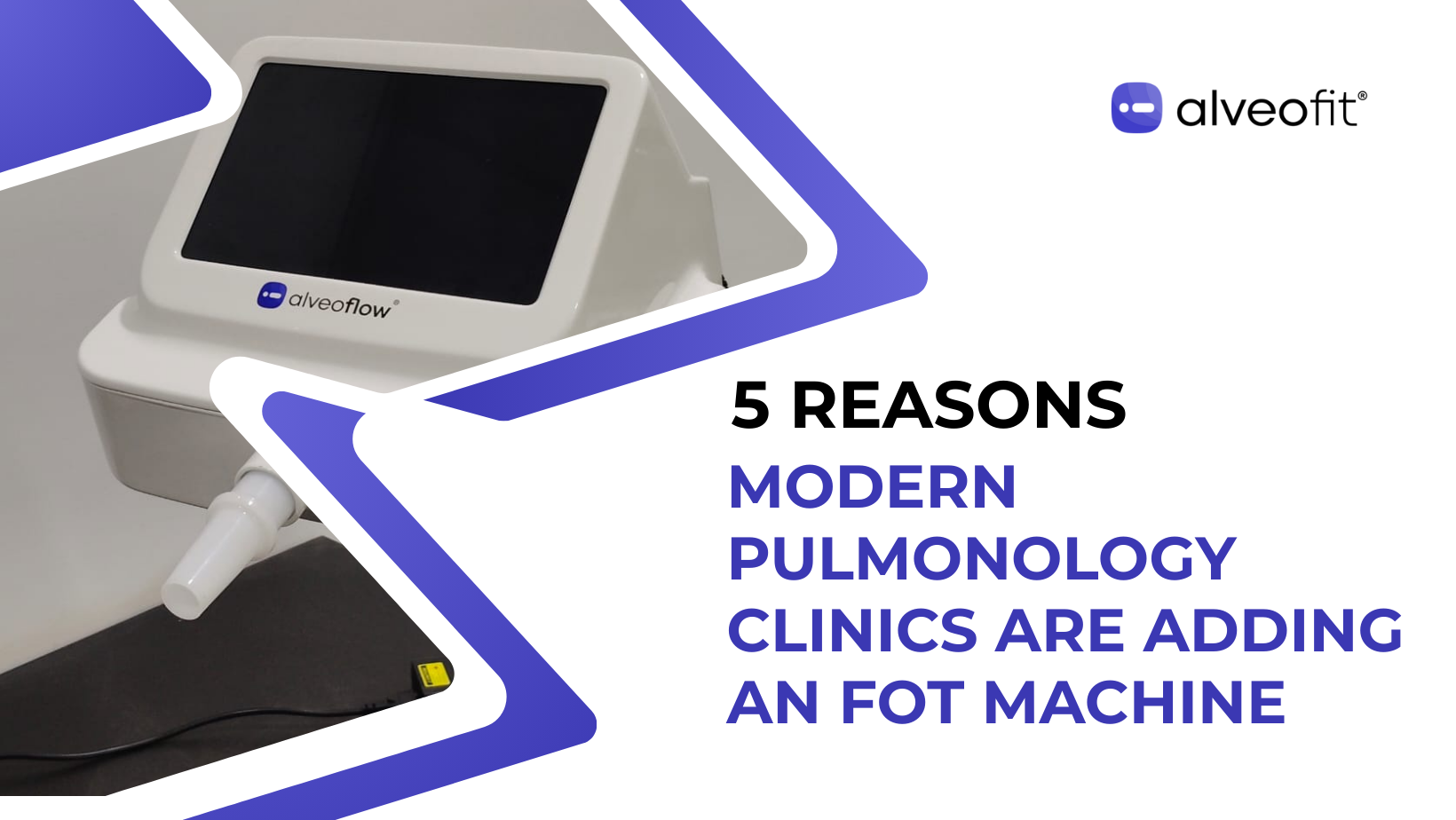
Pairing FET with objective assessment adds meaningful clarity for clinicians. This is why many clinicians use FOT system with spirometer. Such devices allow changes in airway resistance and response to be observed alongside technique use, supporting more informed decisions. Solutions like alveoflow from alveofit are designed with this integration in mind. We are here to help clinicians and patients track lung mechanics with precision while keeping the experience simple and intuitive.