Do you think about your lung health only when you start coughing, feel breathless, or notice a change in your breathing? It's easy to focus on these signs when they appear and forget about your respiratory health the rest of the time.
But managing a respiratory condition involves more than responding to symptoms. Your daily habits, awareness of potential triggers, prescribed treatment, and regular conversations with your doctor all play a role. Understanding how these pieces fit together can help you take a more active part in your care.
So, what does taking charge of your respiratory health actually involve, and how can you make it part of your everyday life?
What Does It Mean to Become the Driver of Your Respiratory Health?
When was the last time you thought about your lung health before you actually felt breathless, started coughing, or noticed something was wrong? If you live with asthma, COPD, or another respiratory condition, you probably know how easily your attention shifts to breathing only when symptoms appear.
But managing your respiratory health involves more than responding when something feels wrong. It means understanding your condition, noticing changes, and taking an active role in decisions about your care.
Think of it this way……
You wouldn't rely on a single day's experience to understand your overall health. Would you?
Your respiratory health deserves the same attention! Regular monitoring, awareness of your symptoms, and conversations with your doctor can help you understand what's changing and what needs attention. The goal of better respiratory health is not to manage everything on your own. It's to become an informed participant in your care. But what does it take to build this habit into your daily life?
What Helps You Take Charge of Your Respiratory Health?
Taking charge of your respiratory health starts with small, consistent actions. You don't need to change everything overnight. The goal is to build habits that support your breathing while helping you understand your condition better.
Here are eight ways to get started:
- Stay physically active:
Choose activities suited to your condition and fitness level. Regular physical activity can support overall health, but discuss safe exercise options with your doctor if breathing difficulties limit you.
- Avoid your known triggers:
Smoke, air pollution, allergens, and other irritants can worsen symptoms in some people. Understanding your triggers can help you make informed choices about your environment and daily activities.
- Build healthier daily routines:
Get adequate sleep, eat a balanced diet, and make time for rest. These habits support general well-being and can make it easier to manage a chronic respiratory condition.
- Practise breathing techniques when recommended:
Your healthcare provider may suggest specific breathing exercises to help you manage breathlessness. Learn the right technique for your condition rather than relying on exercises that may not suit you.
- Notice changes in your symptoms:
Pay attention to recurring coughing, wheezing, breathlessness, or reduced tolerance for everyday activities. These changes may be worth discussing with your doctor.
- Track your lung function:
If your doctor recommends spirometry or home monitoring, take measurements as instructed. An advanced spirometer app can make this experience better by helping you access and review your results over time.
- Follow your treatment plan:
Take prescribed medicines as directed and understand what your doctor recommends when symptoms change. Never adjust treatment based only on readings you get from a spirometer app.
- Stay involved in your care:
Keep appointments, discuss concerns, and share crucial symptoms and measurements with your doctor. Consistent communication helps you make informed decisions together.
Building these habits takes effort, especially when you're juggling daily responsibilities. Keeping track of symptoms, measurements, and changes can also become difficult. But it is essential to take charge of your respiratory health. This is where digital lung health monitoring tools and a spirometer app can support your routine. It can make it easy to organise respiratory health information without making monitoring your entire focus.
How Does the alveofit Patient App Help You Take the Lead?
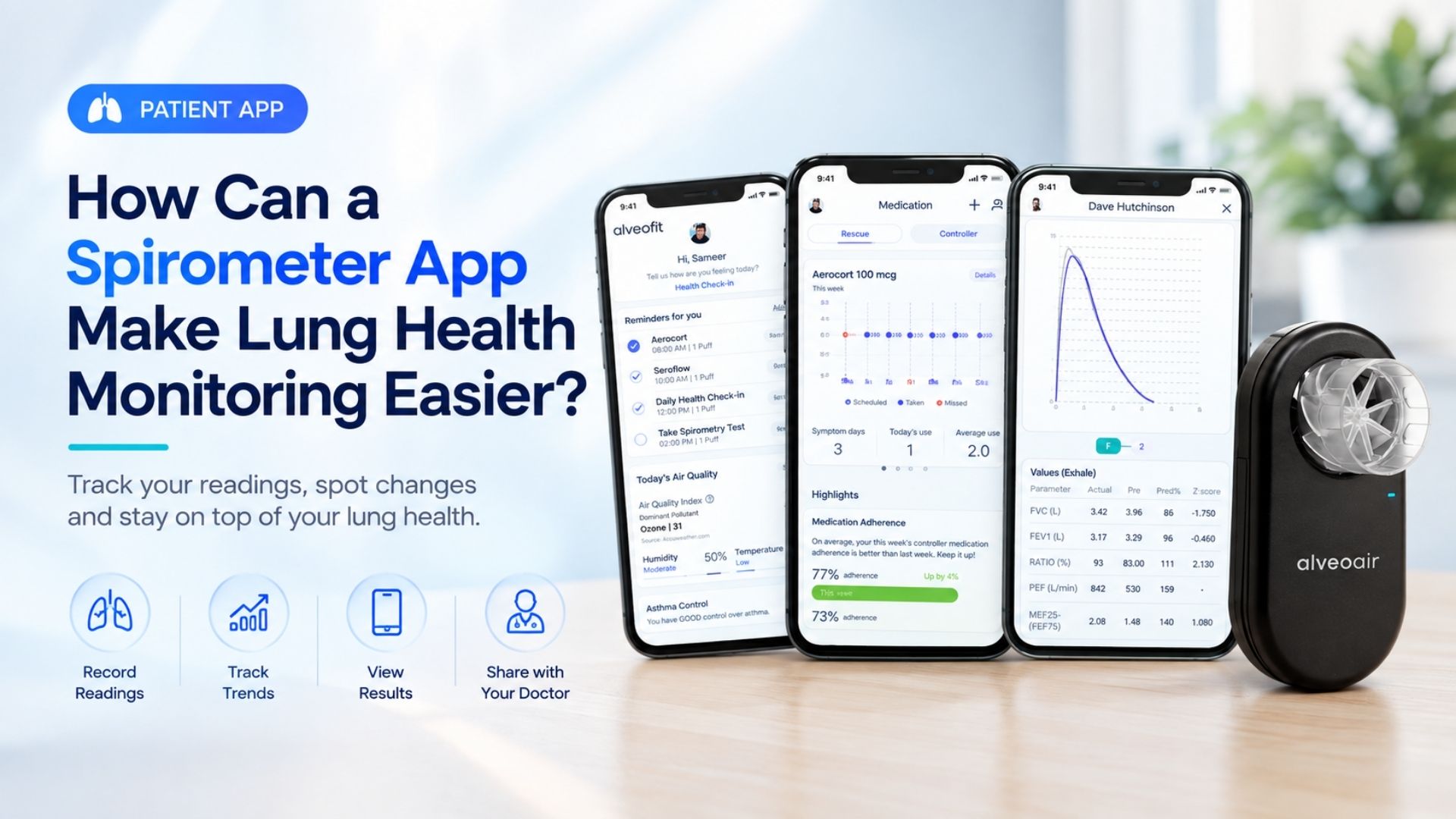
Imagine having your lung function information and respiratory health insights organised in one place instead of relying entirely on memory. That's the idea behind the alveofit patient app.
Designed to work with alveofit's connected respiratory health ecosystem, the spirometer app supports people who want to take a more active role in managing their condition. Here's how it helps:
- Make lung function monitoring easier: Pair the alveofit patient app with a compatible alveoair digital spirometer to perform spirometry and access your lung function measurements at home.
- Understand your progress: The spirometer app helps you review lung function results over time, making it easier to see changes worth discussing with your healthcare provider.
- Stay aware of your control status: The alveofit patient app supports flare-up tracking and provides insights into your respiratory health, helping you become more aware of your condition.
- Share information with your doctor: The spirometer app supports detailed report sharing, so your healthcare provider can review relevant information when discussing your care.
- Keep your monitoring organised: With the alveofit patient app, you can bring important respiratory health information together and make it easier to stay engaged in your care.
You don't have to figure everything out alone to become the driver of your respiratory health. You need the right habits, appropriate medical guidance, and tools that support your efforts. The alveofit patient app brings these elements together to help you stay informed and involved in your respiratory health journey. Explore the alveofit Patient App to learn more about its features and how the connected alveofit ecosystem can support your monitoring routine.
Conclusion
Taking charge of your respiratory health doesn't mean having to figure everything out yourself. It means paying attention to your breathing, building healthier habits, following your treatment plan, and knowing when to seek medical advice.
The right tools can also make it easier to keep track of your lung function and share useful information with your doctor. alveofit patient app, for instance, can support this process by helping you access and review your measurements. It offers features designed to support home monitoring and communication with your healthcare provider.
Remember, better respiratory health starts with understanding your condition and staying involved in your care. Small, consistent steps can help you make more informed decisions along the way.
FAQs
1. How can you improve your respiratory health every day?
Stay physically active within your limits, avoid known triggers, get adequate sleep, and follow your prescribed treatment plan. Track changes in your symptoms and consult your doctor when something concerns you.
2. How can a spirometer app help you manage your respiratory health?
A spirometer app can help you access and review lung function measurements over time. These records can help you recognise changes and share relevant information with your healthcare provider.
3. How does the Alveofit Patient App support respiratory health monitoring?
The alveofit Patient App works with compatible alveofit respiratory devices. Together, it supports home lung function monitoring, reviewing measurements, tracking flare-ups, and sharing reports with your healthcare provider. It complements professional medical care rather than replacing it.