If you live in Delhi, you know what winter can do to the air. The mornings turn colder, visibility drops, and the familiar city can disappear behind a layer of haze. Some days, stepping outside feels different too.
You may cough more, feel breathless sooner, or notice a tight feeling in your chest. People in Delhi living with respiratory issues like asthma or COPD may notice these changes even more. But there is another concern that often gets missed.
“How do you know whether a difficult breathing day is simply a response to the air or a sign that your lung function has changed?”
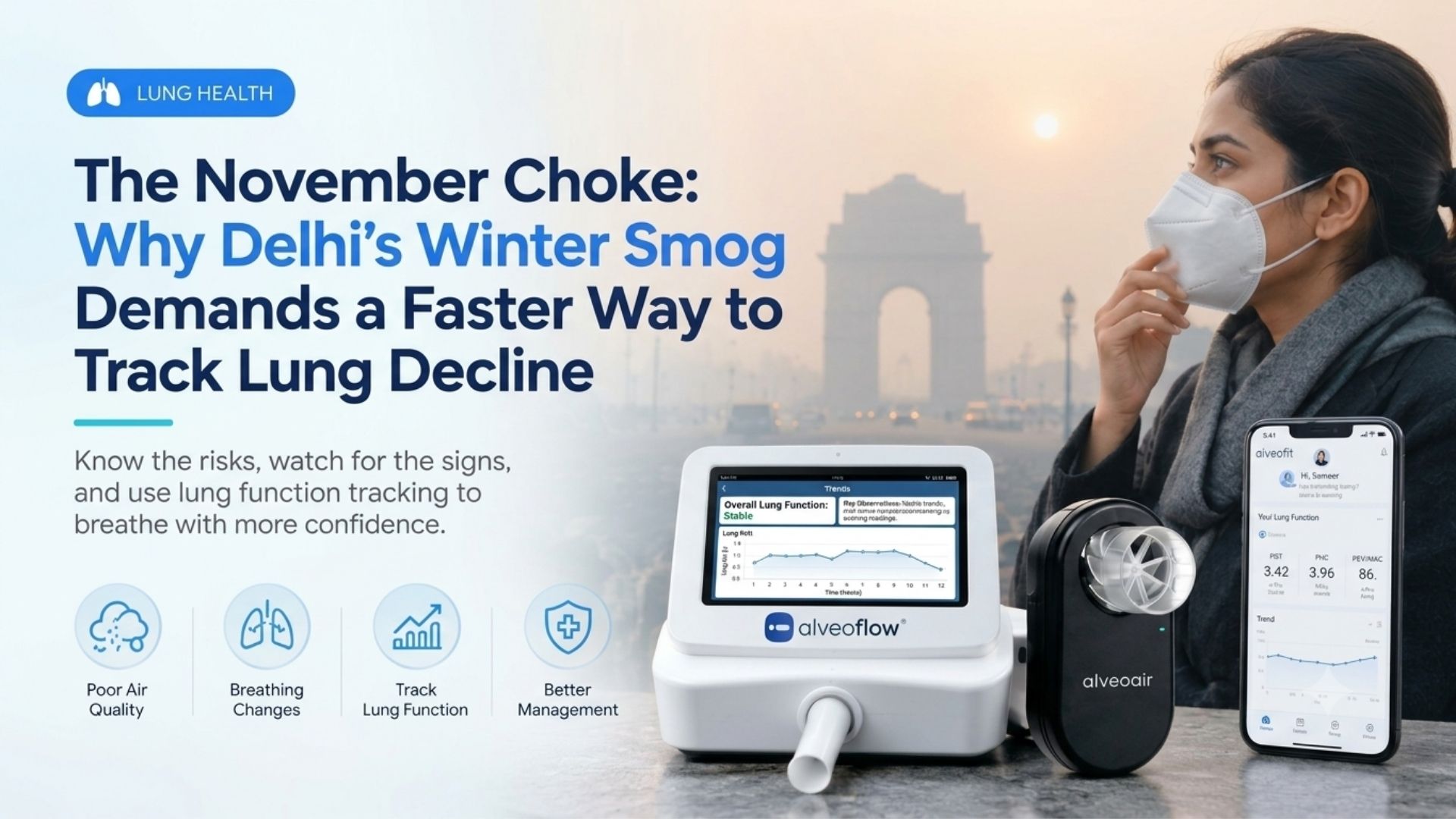
Yes, symptoms can tell you that something feels off, something is different. But they cannot measure how your lungs are working. This is where regular lung-function tracking with devices like alveoair digital clinical spirometer becomes important. It gives you and your doctor something more objective to look at, especially during months when Delhi’s air can become difficult to breathe.
Why Does Winter Smog Become So Severe in Delhi?
Do you think Delhi’s winter smog is caused by pollution alone? No, even the Weather is to blame, as it also creates conditions that keep pollutants concentrated near the ground.
In fact, several changes happen together during winter, which is why the air can feel noticeably worse.
- Temperature Inversion Keeps Polluted Air Close to the Ground
Normally, warmer air can rise and help pollutants disperse, but winters in Delhi can change this pattern.
A temperature inversion occurs when a layer of warmer air sits above colder air near the ground. The colder air becomes trapped underneath, along with pollutants released from vehicles, industries, dust, and other sources. That’s exactly why the pollution in Delhi remains closer to the level at which people are breathing.
- Low Winds Allow Delhi’s Pollution to Linger
Wind plays an important role in clearing pollutants from the air. It moves smoke, dust, gases, and fine particles away from where they were released and helps disperse them over a larger area.
But Delhi’s winter can bring calmer wind conditions. With less air movement, pollutants released from vehicles, industries, construction, and other sources are not carried away as quickly. Instead, they can remain concentrated closer to the ground and continue accumulating in the air around you.
The result is not simply a hazy sky. You may be breathing polluted air for longer because the air around you is not moving enough to clear it.
- PM2.5 Can Travel Deep Into Your Lungs
There is another concern in Delhi’s winter air. It contains fine particles called PM2.5, which are small enough to travel deep into your respiratory system. These particles can pass through the nose and upper airways and reach deeper parts of the lungs. Once they reach the airways, they can irritate the respiratory lining and trigger inflammation.
You may notice the effect as coughing, wheezing, chest tightness, or shortness of breath. People with asthma, COPD, or sensitive airways may find these symptoms harder to manage during periods of heavy pollution.
So, what might all this look like when you are simply going about your normal day?
What Signs Should You Watch For During Delhi’s Smog Season?
Delhi’s winter smog can affect people differently. Some may notice a persistent cough, while others may feel breathless during activities that usually feel easy. Initially, you may simply feel that your breathing is not quite the same as it normally is. But that does not mean things are not getting serious. That’s why you should keep an eye out for:
- Persistent or recurring cough: A cough that lasts longer than usual or keeps returning can be a sign of airway irritation. You may notice it more after spending time outdoors on heavily polluted days.
- Breathlessness during routine activities: Walking, climbing stairs, or carrying groceries may suddenly leave you more breathless. Needing more breaks than usual can also signal a change worth noticing.
- Wheezing: A whistling sound while breathing can occur when the airways become irritated or narrowed. People with asthma may notice this more during periods of poor air quality.
- Chest tightness: Your chest may feel heavy, tight, or uncomfortable, particularly after spending time in polluted air. Persistent or worsening chest symptoms should be discussed with a healthcare professional.
- Reduced exercise tolerance: Activities that normally feel comfortable may start leaving you tired or short of breath. Gradual changes can be easy to miss, so comparing them with your usual activity level can help.
- Worsening asthma or COPD symptoms: Existing respiratory conditions may become harder to manage during periods of heavy pollution. More frequent coughing, wheezing, or breathlessness can indicate a change from your usual pattern.
These symptoms do not tell you exactly what is happening with your lung function. They tell you that something has changed, and that change may need a closer look.
So, how can you tell whether you are simply having a difficult breathing day or your lung function is actually changing? This is where regular lung-function tracking with devices like the alveoair digital clinical spirometer can help provide more objective information for you and your doctor.
Does Feeling Worse Mean Your Lung Function Has Declined?
Feeling more breathless or coughing more does not automatically mean your lung function has declined. Delhi’s winter smog can irritate your airways, while cold weather, infections, activity, and other factors can also change how you feel.
So, should you simply ignore these changes? No! A symptom that keeps returning, becomes worse, or starts affecting your usual activities deserves attention.
The problem here is that your symptoms won’t really be enough to tell what is happening inside your lungs. You may feel worse on a heavily polluted day without having a lasting decline in lung function. You may also feel fine while a measurable change has already occurred. This is why looking at symptoms alone is not enough. Monitoring them through lung-function tracking devices like the alveoair digital clinical spirometer becomes essential in these cases.
What Should You Do If Your Breathing Changes?
A change in your breathing does not always mean your lung function is getting worse. Still, persistent symptoms deserve your attention, especially if they start interfering with things you normally do.
Start by noticing the pattern. Does your cough get worse after spending time outdoors? Do you feel more breathless on heavily polluted days? Are you wheezing more often, or finding routine activities harder than before?
These details can help you and your doctor understand what may be affecting your breathing.
Here’s What You Can Do
- Pay attention to changes in your symptoms: Keep track of coughing, wheezing, breathlessness, chest tightness, or changes in your usual activity level. Note when these symptoms appear and whether they seem worse during periods of heavy pollution.
- Speak with your doctor if the changes continue: Persistent or worsening symptoms deserve a proper assessment. Your doctor can consider your symptoms, medical history, existing respiratory conditions, and other factors before deciding whether you need further testing.
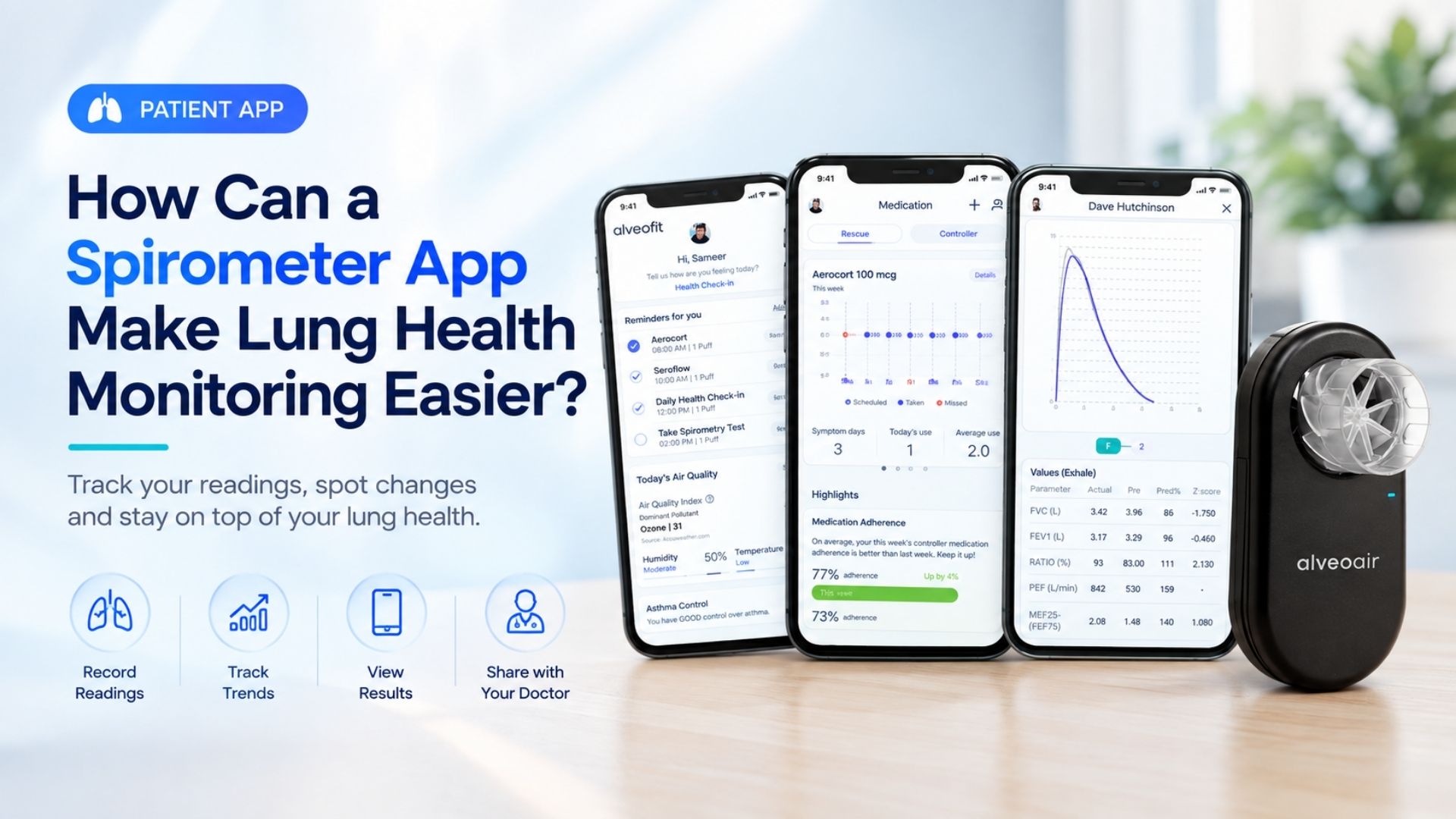
- Use suitable lung-monitoring tools when recommended: Depending on your condition, your doctor may recommend tools such as a spirometer or peak flow meter. A digital spirometer can provide measurable information about lung function and keep you updated about your health.
Planning to buy a spirometer? Check the digital spirometer price in India here.
How Is a Digital Spirometer a Faster Way to Track Lung Decline?
Delhi’s winter smog can make your breathing feel different from one day to the next. You may cough more on a heavily polluted day or feel breathless after spending time outdoors.
But how do you know whether your lungs are simply reacting to the air or your lung function has actually changed? You cannot answer that from symptoms alone. You need something that can measure what your lungs are doing. This is where spirometry can help.
- It Turns Breathing Changes Into Measurable Data
So, what can tell you whether your breathing has actually changed during Delhi’s smog season? Spirometry gives you a way to measure that change. Depending on the device, a test can show how much air you can force out and how quickly you can do it.
But note that the level of detail can vary between spirometers. Basic devices may provide fewer measurements, while advanced clinical devices can give clinicians a more detailed view of lung function.
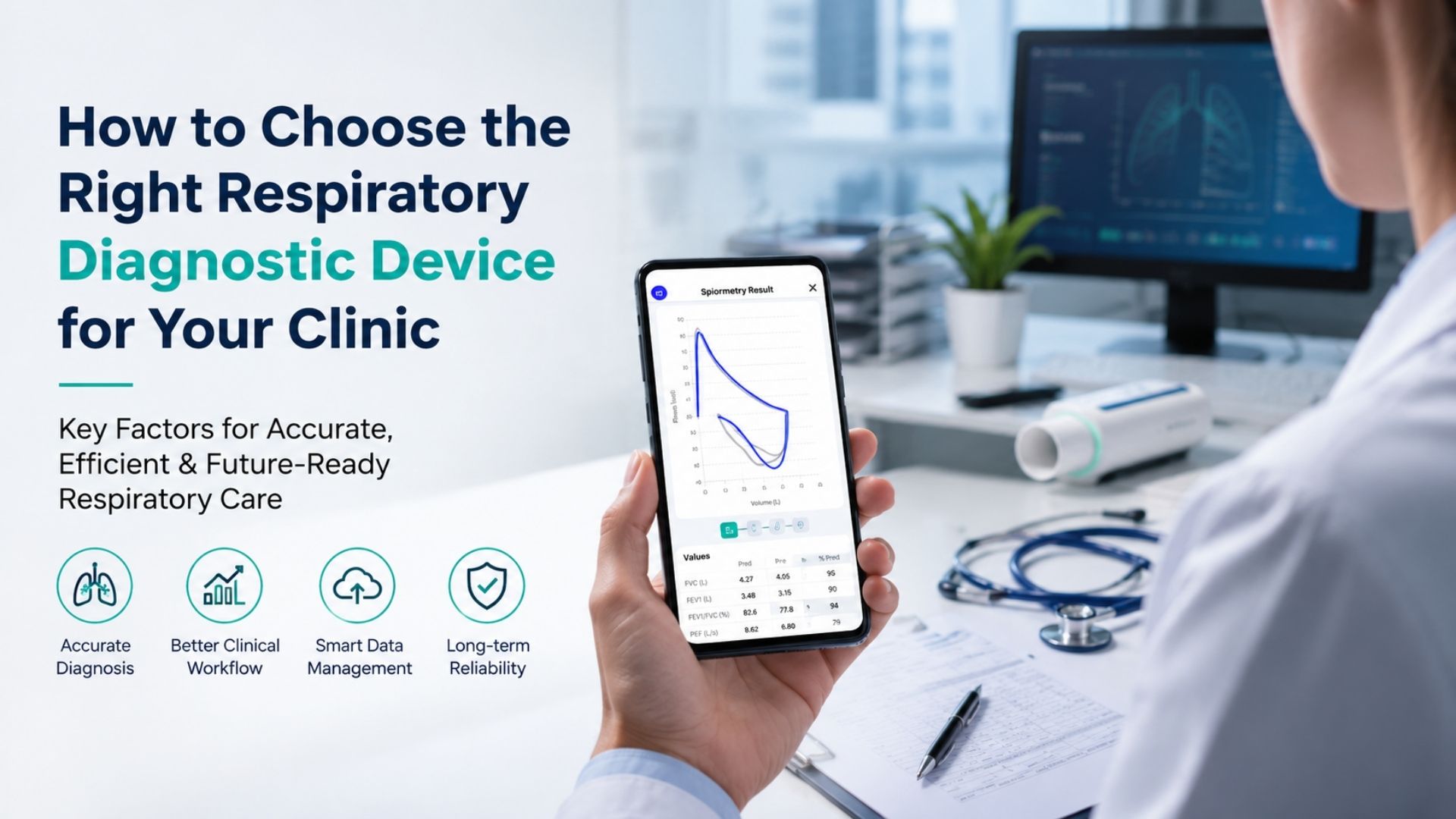
The alveoair digital clinical spirometer offers measurements such as FEV1, FVC, FEV1/FVC, and PEF. These readings can help clinicians assess airflow and compare results across tests. So, instead of judging every bad breathing day by how you feel, spirometry gives your doctor measurable results to compare with your symptoms and previous tests.
- It Makes Changes Easier to Compare
Delhi’s air quality can change quickly during winter. Your breathing can change with it, making a single test difficult to interpret on its own. But that’s where regular spirometry gives your doctor a clearer timeline. They can see how your results look across different periods, including days when your symptoms become worse.
This makes it easier to spot a pattern rather than treating every difficult breathing day as a separate event.
- It Helps You Move Beyond Guesswork
Why rely only on how your breathing feels when you can actually measure it? High-tech devices like the alveoair digital clinical spirometer can provide objective lung-function measurements to support a more informed clinical assessment. This gives your doctor a clearer basis for deciding whether your symptoms need further evaluation or a change in your care plan.
So, during Delhi’s winter smog season, spirometry can help turn a vague change in breathing into measurable information your doctor can actually track.
Conclusion
Delhi’s winter smog can make breathing harder, especially if you already live with asthma, COPD, or another respiratory condition. A cough, breathlessness, or chest tightness may be your first sign that something has changed, but symptoms alone cannot tell you whether your lung function has changed too.
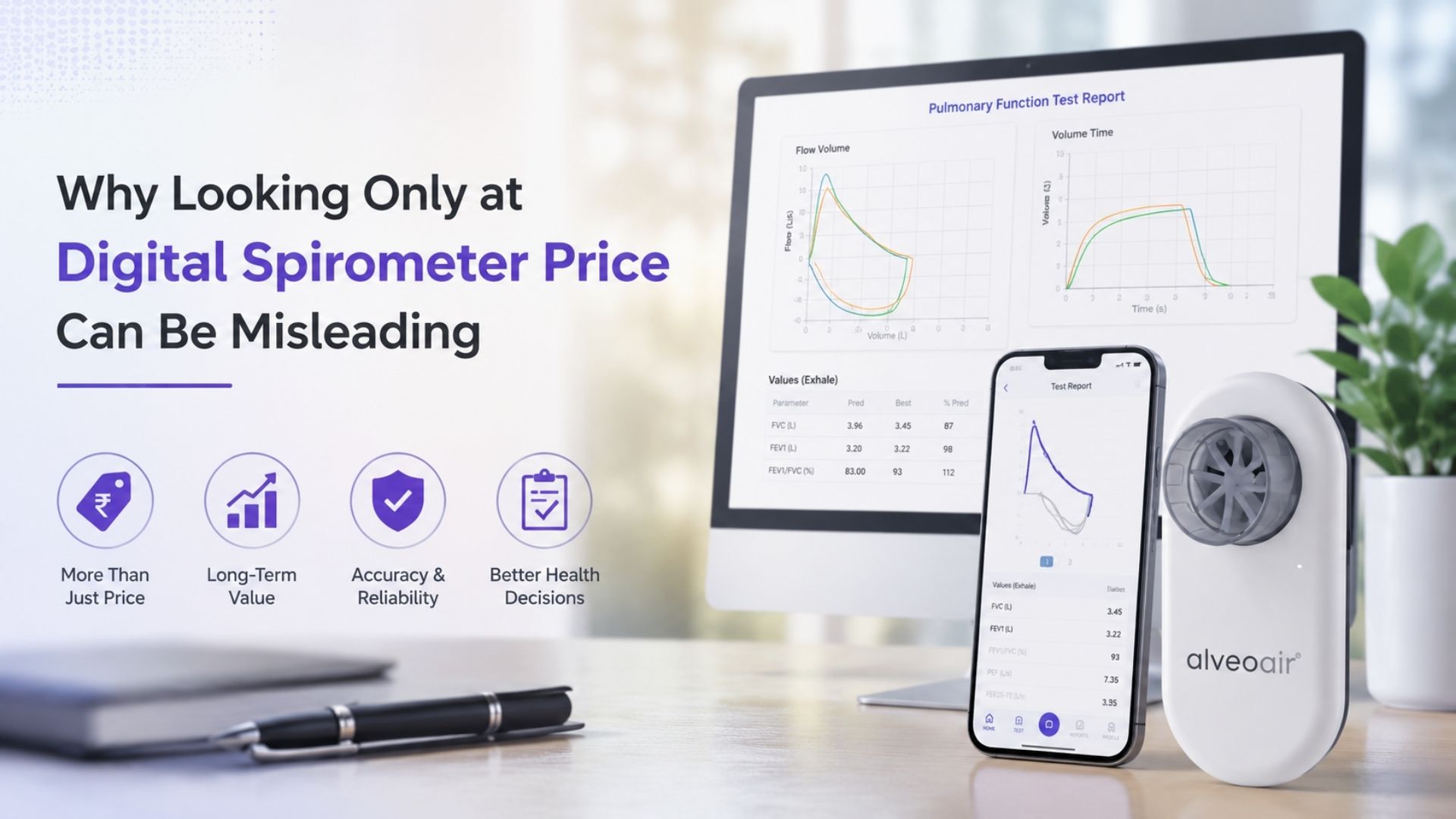
This is why more people with asthma, COPD, and other respiratory conditions are searching for digital spirometer price in India and assessing their options. But you should not just look at digital spirometer price in India. You also need to look at what a device offers and how easily it can support regular lung-function monitoring.
So, are you looking for a reliable lung-function monitoring device? Explore the alveoair digital clinical spirometer. It lets you measure important lung-function parameters such as FEV1, FVC, FEV1/FVC, and PEF, helping you get a clearer view of how your lungs are working. Its standard, full-loop, and pre- and post-bronchodilator testing options also give clinicians more flexibility when assessing different respiratory conditions.
The right device can make it easier to collect consistent lung-function measurements, review results, and share useful information with your doctor. During Delhi’s smog season, having this information can help you move beyond simply asking, “Why do I feel worse today?” and start asking, “What are my lung-function measurements telling me?”
FAQs
Can Delhi’s air pollution affect lung function?
Delhi’s winter pollution can irritate the airways and worsen respiratory symptoms. People with asthma or COPD may notice these effects more during periods of poor air quality.
What does a spirometer measure?
A spirometer measures how much air you can breathe out and how quickly you can do it. Depending on the spirometer you choose, the device may provide different levels of lung-function detail.
How often should lung function be checked during Delhi’s smog season?
There is no single testing schedule that suits everyone. Your doctor can recommend how often you should check your lung function based on your condition, symptoms, and treatment.
Can a digital spirometer help track changes in lung function?
Yes, a digital spirometer can record measurable lung-function results that can be reviewed across tests. This can give your doctor useful information when assessing changes in your breathing.