alveoflow Neo · India's first portable oscillometry
Breathe normally.
That's the test.
India's first portable oscillometry device, designed and built in India. Airway resistance and reactance, measured while the patient breathes quietly.
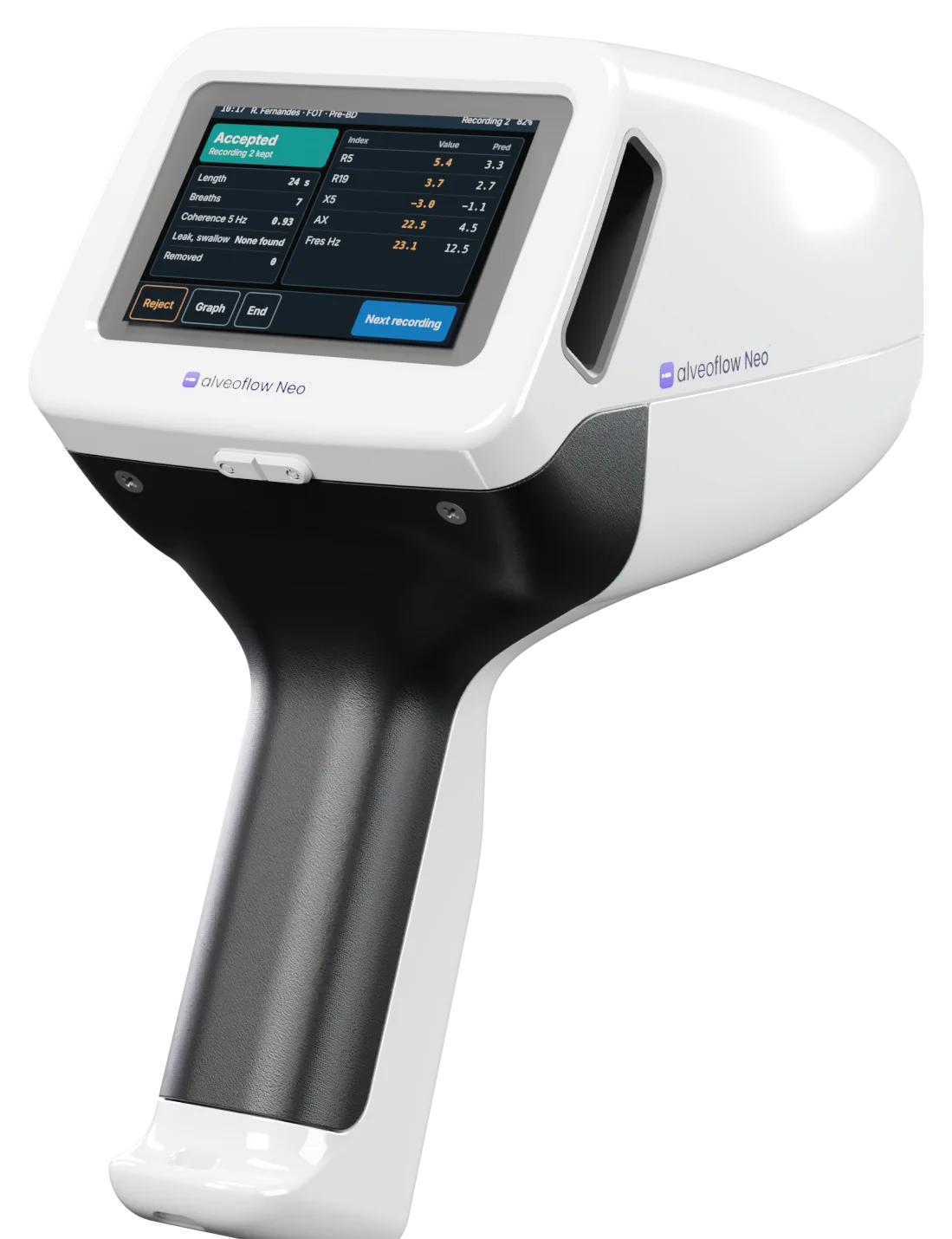
- India's first portable oscillometry
- Patent pending
- Design applied for
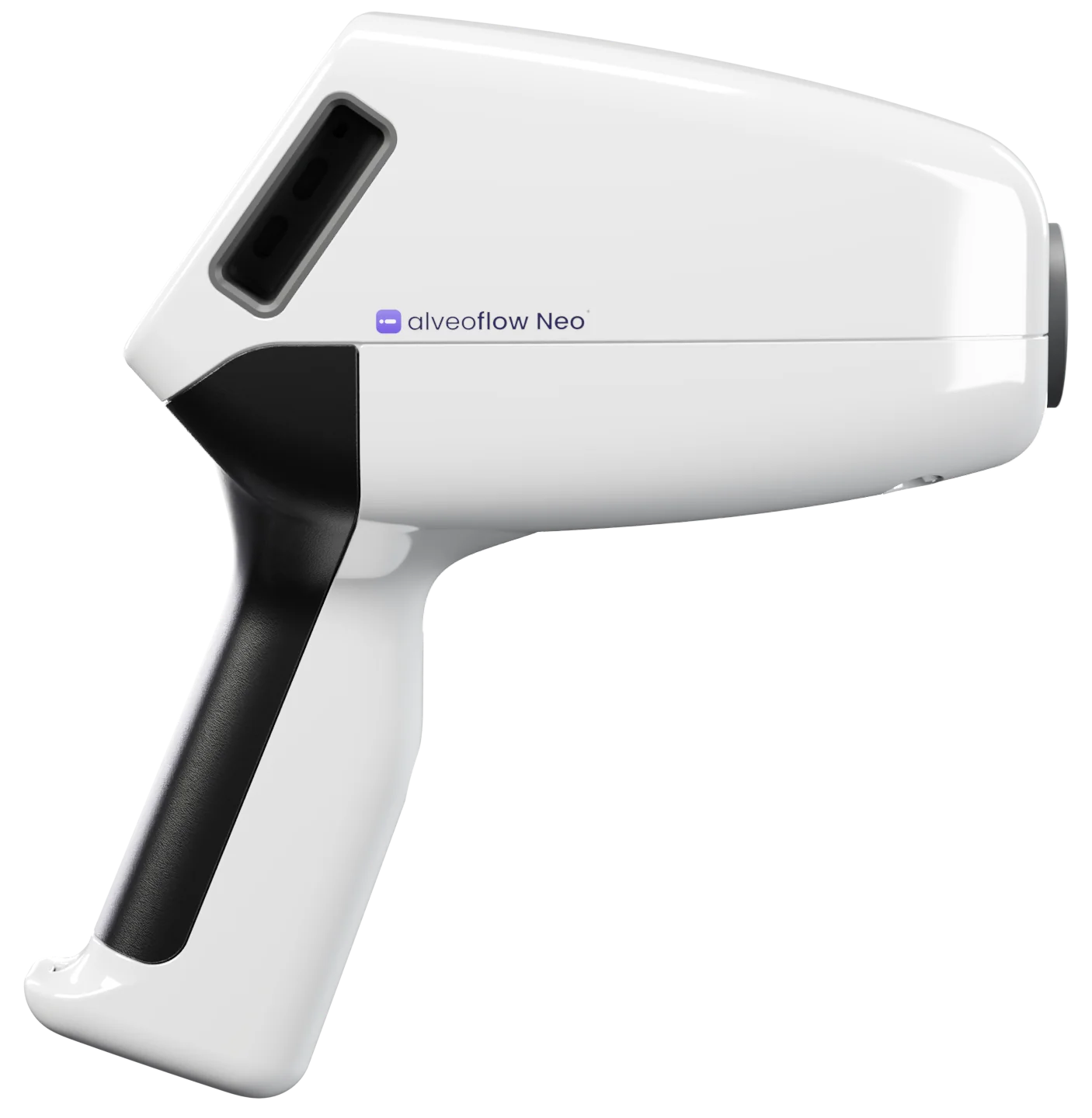
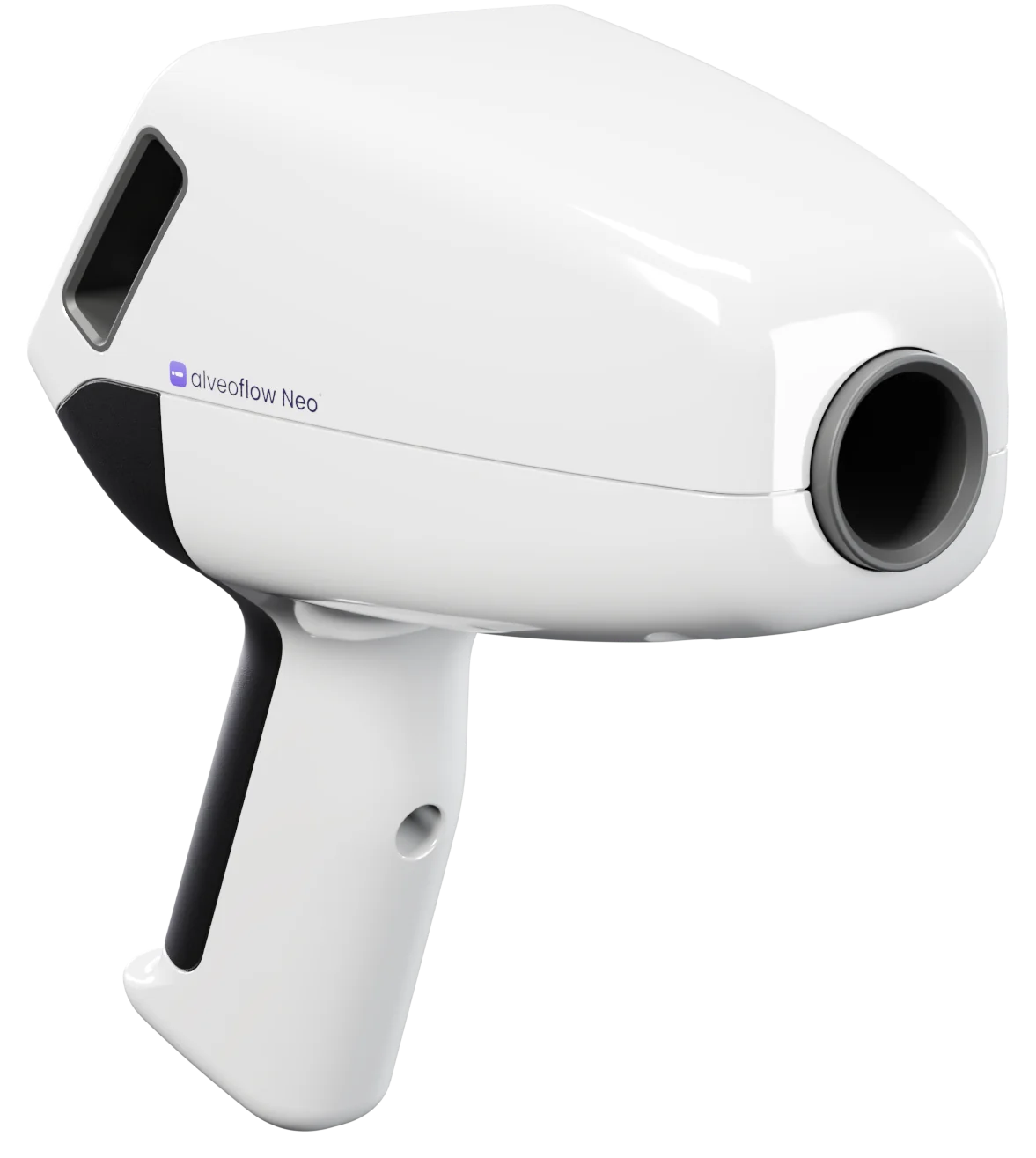
Designed to be held
Light in the hand. Ready in seconds.
One device, one mouthpiece, no cart.
Tidal breathing
15–30 seconds of quiet breathing.
No forced blow. No coaching.1
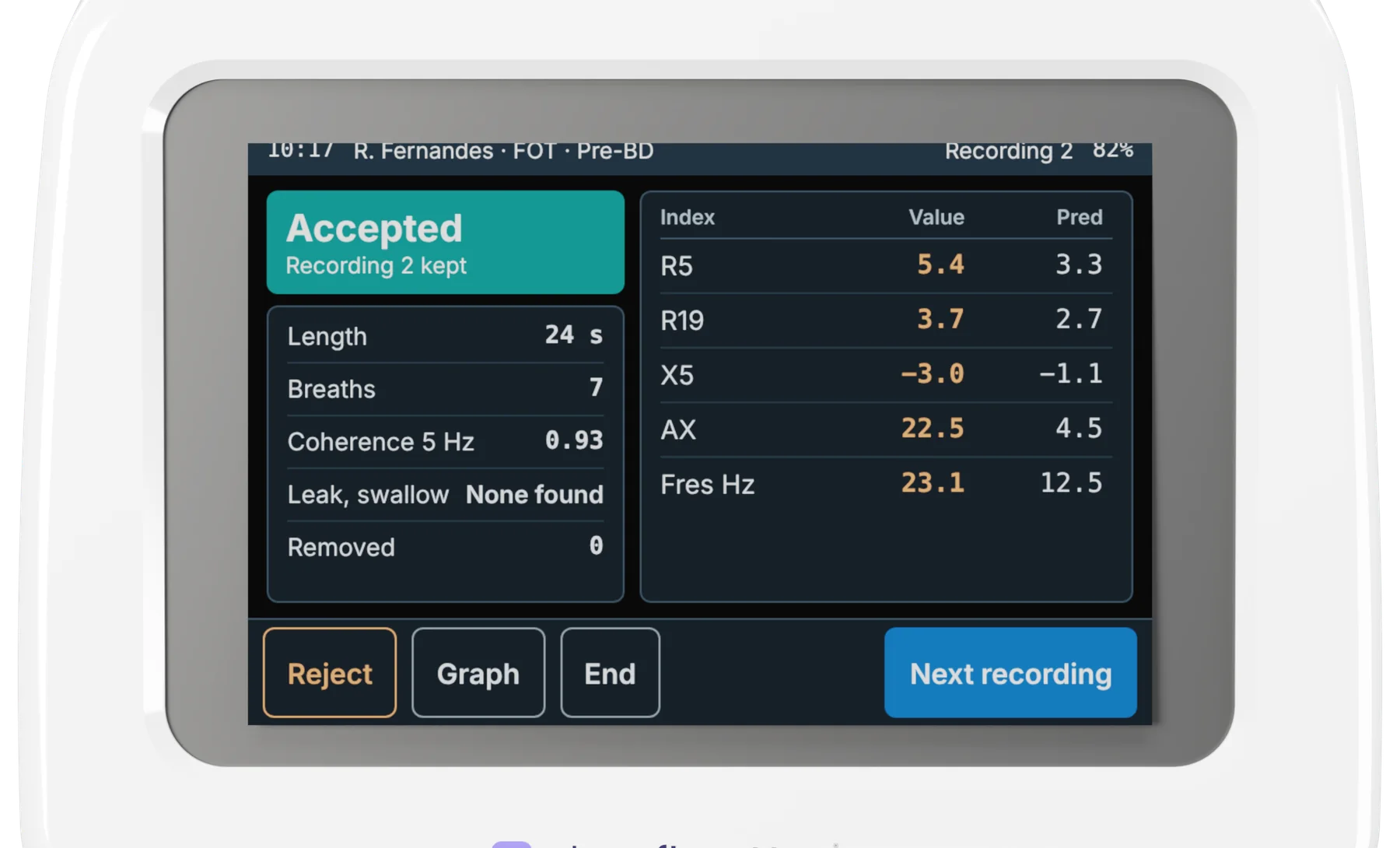
Results on the device
Six numbers, right on screen.
R5, R19, X5, AX and Fres against predicted.
Quality built in
Accepted. Compared to predicted.
Checks for leaks, swallows and coherence before a result is kept.
Test the patients spirometry can't.
Spirometry needs a maximal, coached blow. Oscillometry measures during the breathing the patient is already doing.
Forced spirometry
- Maximal breath in, then a hard, fast, sustained blow
- Coaching, repeat attempts, acceptability criteria
- Hard for young children, older adults and anyone breathless at rest
alveoflow Neo
- Quiet breathing through the mouthpiece
- No coaching, no maximal effort, no learned technique
- Separates resistance at low and high frequency
Oscillometry complements spirometry. Run Neo and alveoAir Ultra in the same visit when both are needed.
Six numbers.
The whole airway tree.
The device coaches the test.
A 3.5-inch screen guides the operator from first breath to accepted result.
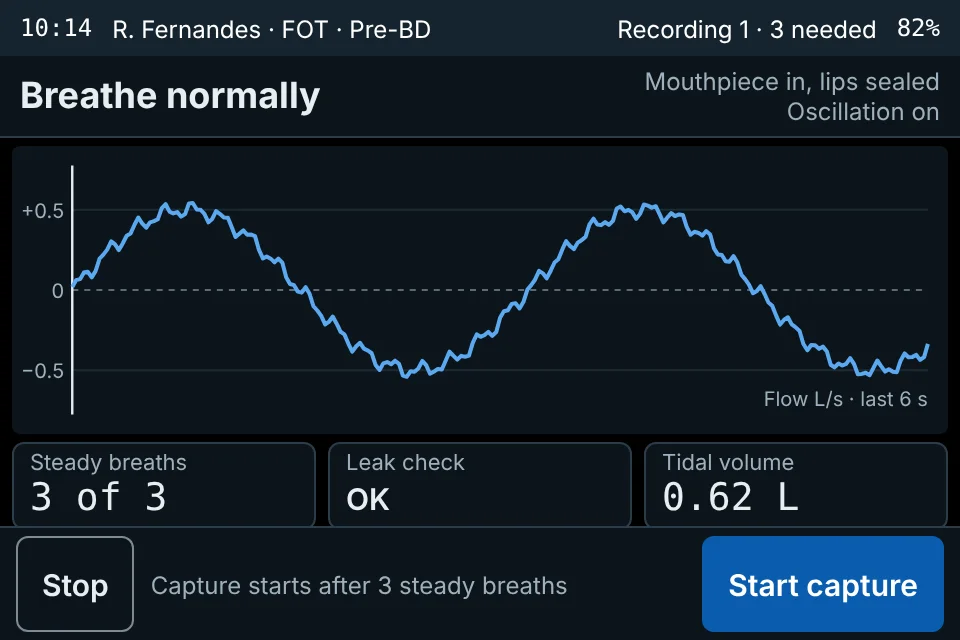
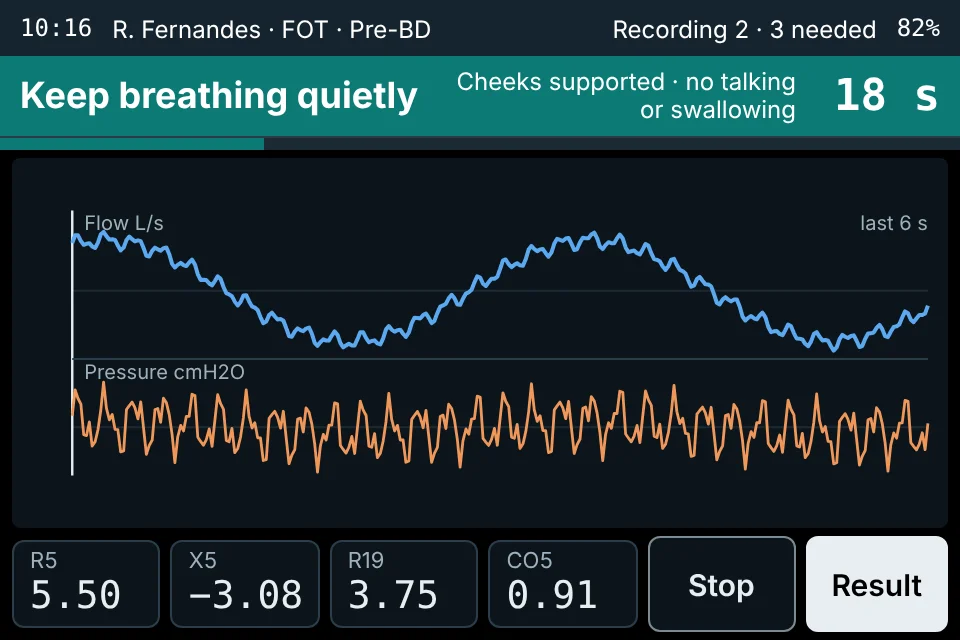
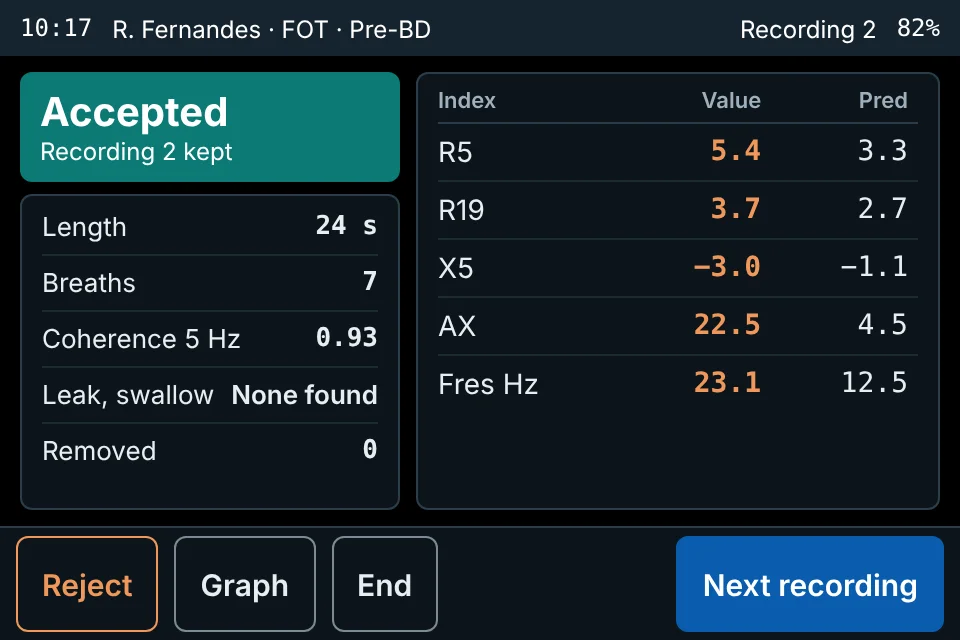
Take a closer look.
Measured to the ERS standard.
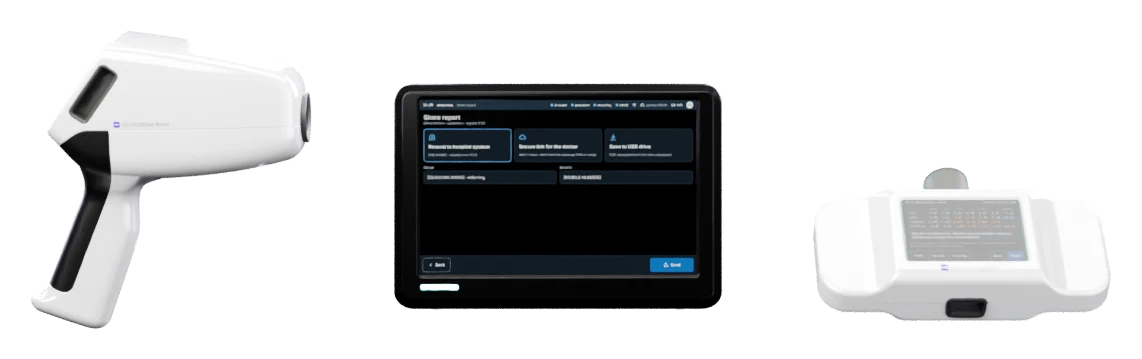
Every result, straight to the Hub.
Neo sends each recording wirelessly to alveo Hub, where it joins the patient's spirometry in one record.
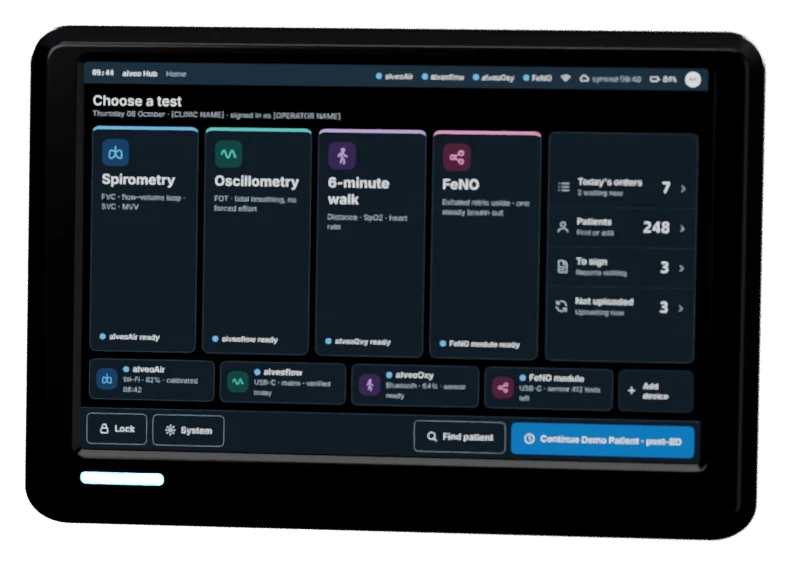
Better with alveo Hub
Every Neo test, in the patient's record.
Each recording lands on the Hub next to the patient's spirometry and walk test. Works offline, and syncs to alveoConnect when you are online.
Portable FOT
Portable oscillometry (FOT) with alveoflow Neo
alveoflow Neo is a portable oscillometry device for wards, screening camps and smaller clinics. It runs the forced oscillation technique (FOT) at 5–40 Hz while the patient breathes normally, and shows results on its 3.5-inch screen.
Results sync wirelessly to the alveo Hub, so FOT and spirometry for the same patient end up in one record.
Questions clinicians ask
What does a portable FOT device measure?
The same oscillometry values as a clinic system: airway resistance (R5, R20, R5–R20), reactance (X5), reactance area (AX) and resonant frequency (Fres).
Who is oscillometry useful for?
Patients who find a forced blow hard: children, older adults, people with breathlessness or weakness. It is also used to look at small airway function, where R5–R20 is the usual marker.
How long does an FOT test take?
A test records quiet tidal breathing for about 15–30 seconds; usually three acceptable measurements are taken.
Which standards does alveoflow Neo follow?
The ERS technical standard on respiratory oscillometry (King et al., 2020); IEC 60601-1, IEC 60601-1-2, IEC 60601-1-11; ISO 10993; RoHS. CDSCO Class B, MDR 2017.
Tech specs
- Method
- Forced oscillation technique (respiratory oscillometry)
- Excitation
- Hybrid pseudo-random and chirp waveform
- Frequency range
- 5–40 Hz
- Parameters
- R5, R20, R5–R20, X5, AX, Fres, intra-breath loops
- Test
- 15–30 s tidal breathing1
- Repeatability
- ±3% resistance, ±5% reactance
- Calibration
- Automated pre-test, verification against reference load
- Display
- 3.5-inch colour screen
- Connectivity
- Wireless to alveo Hub
- Size
- About 112 × 217 × 228 mm
- Consumables
- Mouthpiece and bacterial/viral filter
- Standards
- ERS technical standard on respiratory oscillometry (King et al., 2020). IEC 60601-1, IEC 60601-1-2, IEC 60601-1-11. ISO 10993. RoHS.
- Regulatory
- CDSCO Class B, MDR 2017. ISO 13485, MDSAP. FCC.3