alveoflow Pro · Registered design · Made in India
Oscillometry.
At clinic scale.
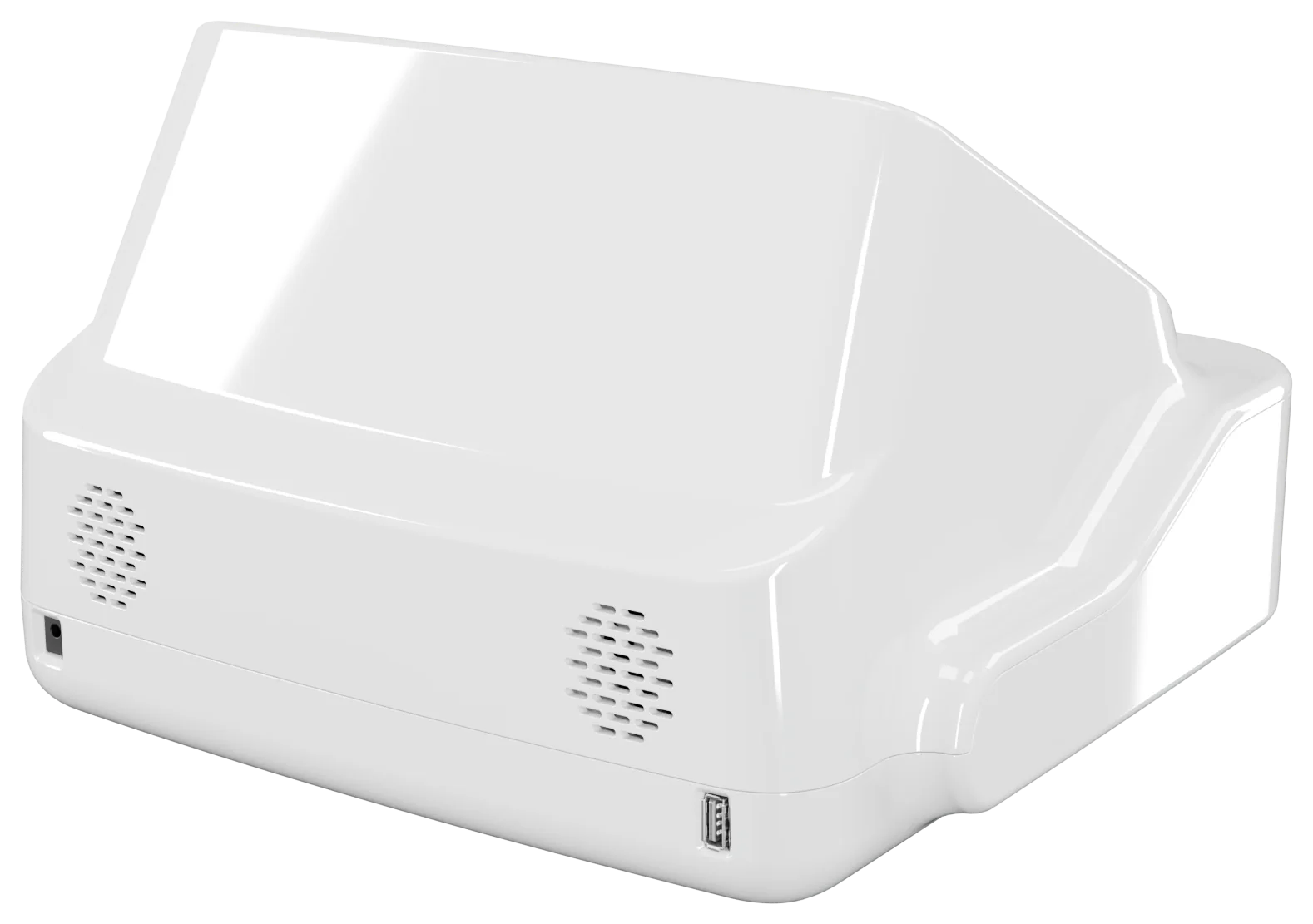
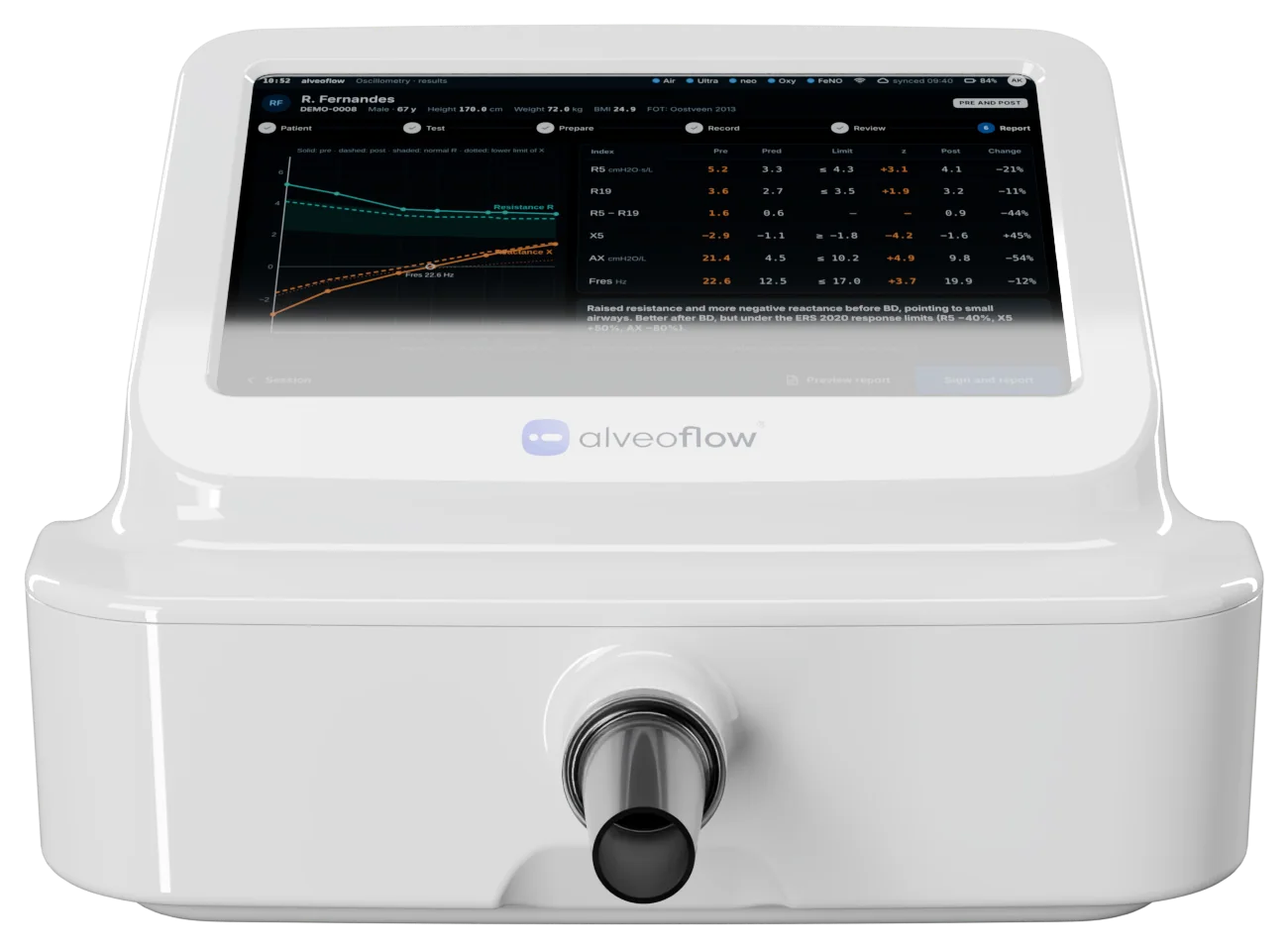
The flagship oscillometry system, designed and engineered in India. A 10.1-inch screen on an articulating arm, built for a full day of patients.
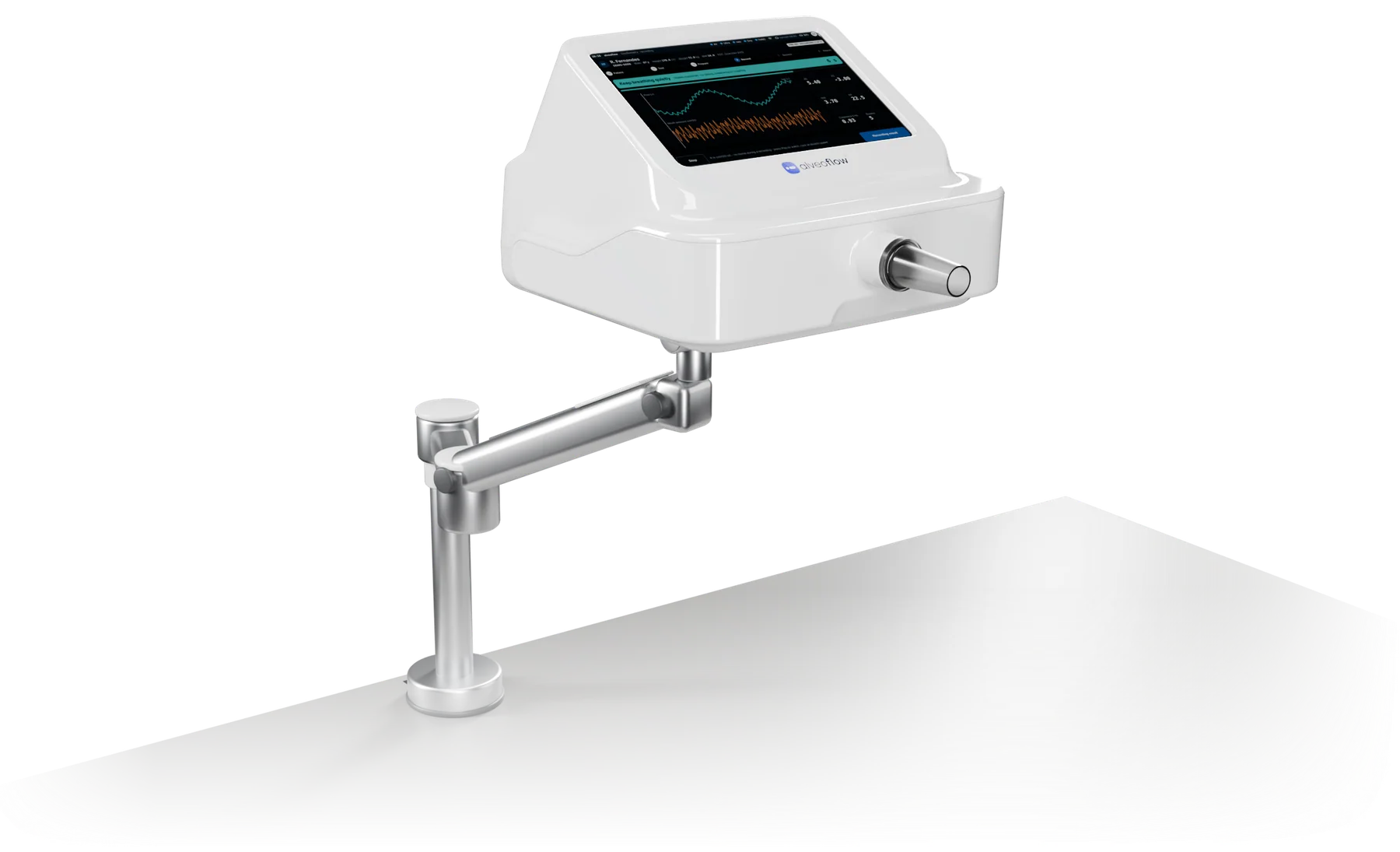
- Registered design · No. 505497-001
- Patent pending
- Built in Pune
Out of the way
Parked when you don't need it.
The desk stays clear between patients.
To the patient
One hand brings it into place.
Swing, lower and tilt to suit a seated patient.
Quiet breathing
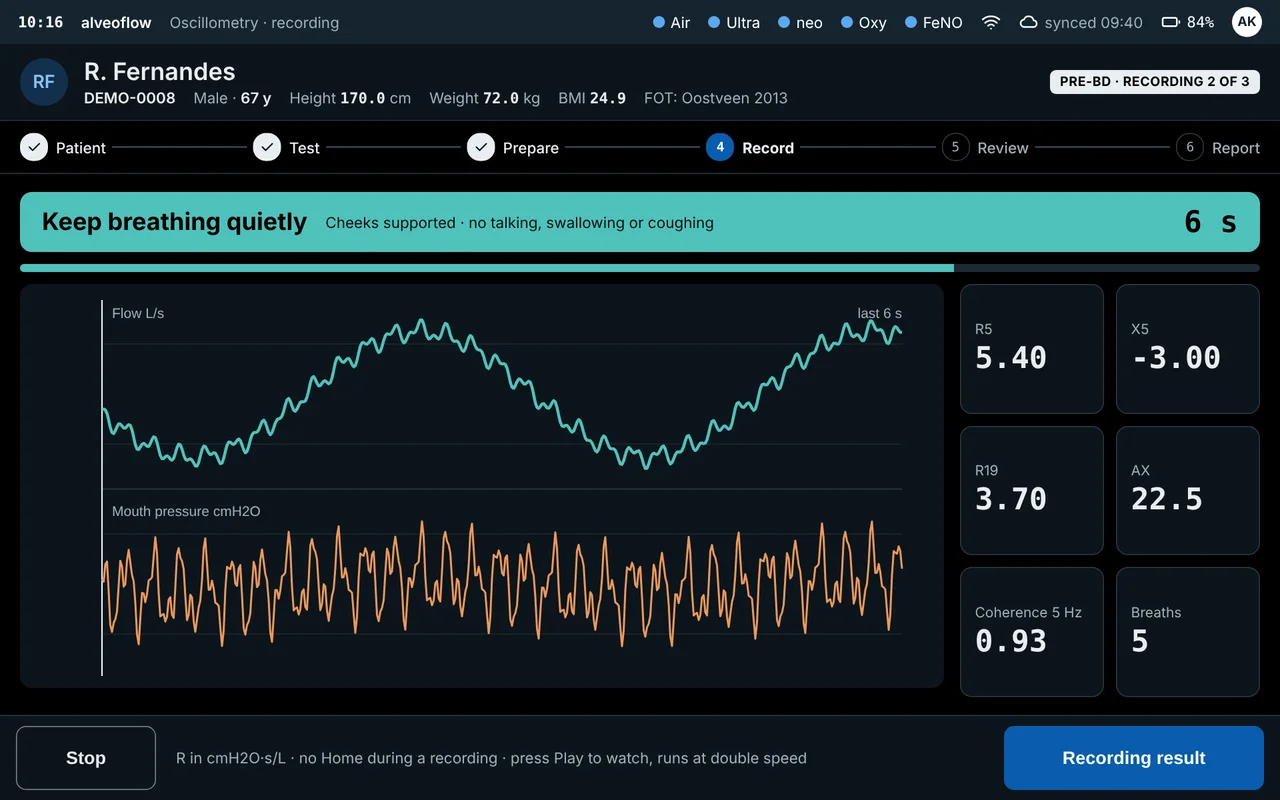
The patient breathes. Pro records.
Live flow and pressure on a 10.1-inch screen.
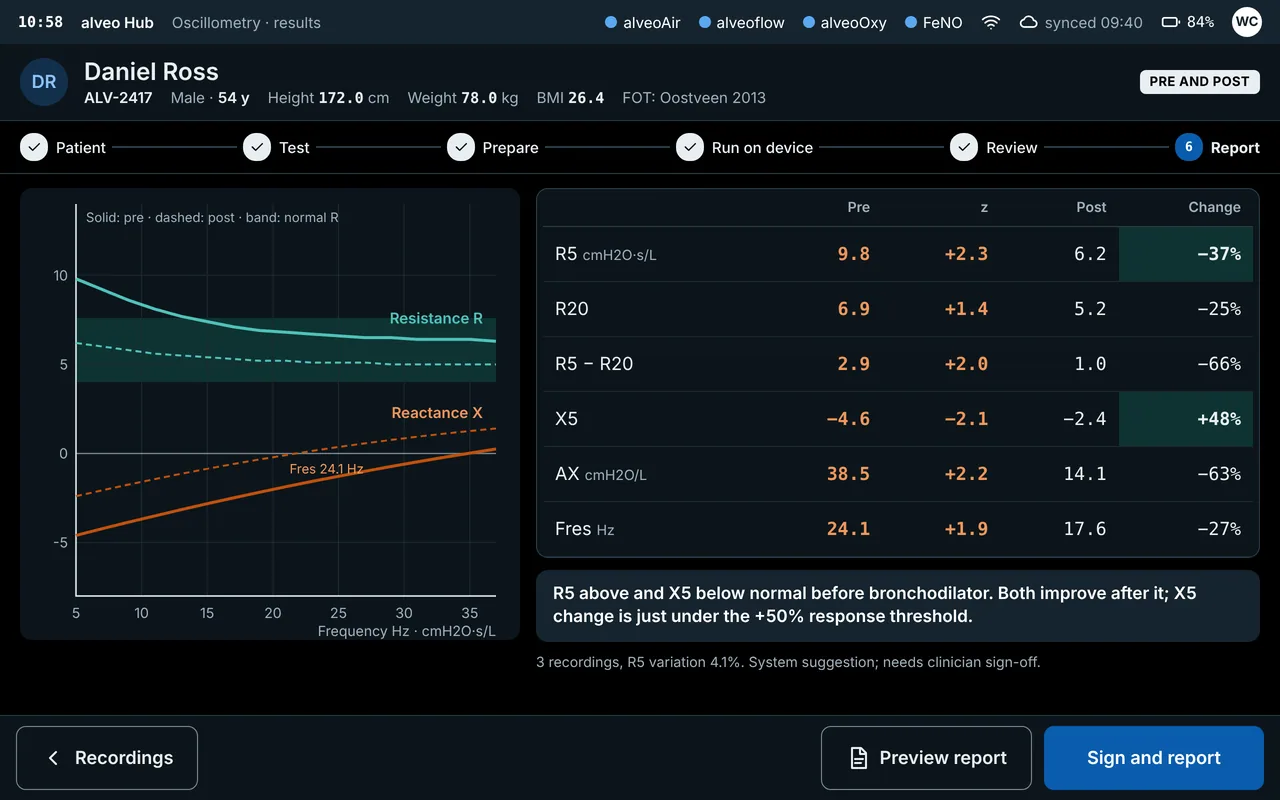
Pre and post
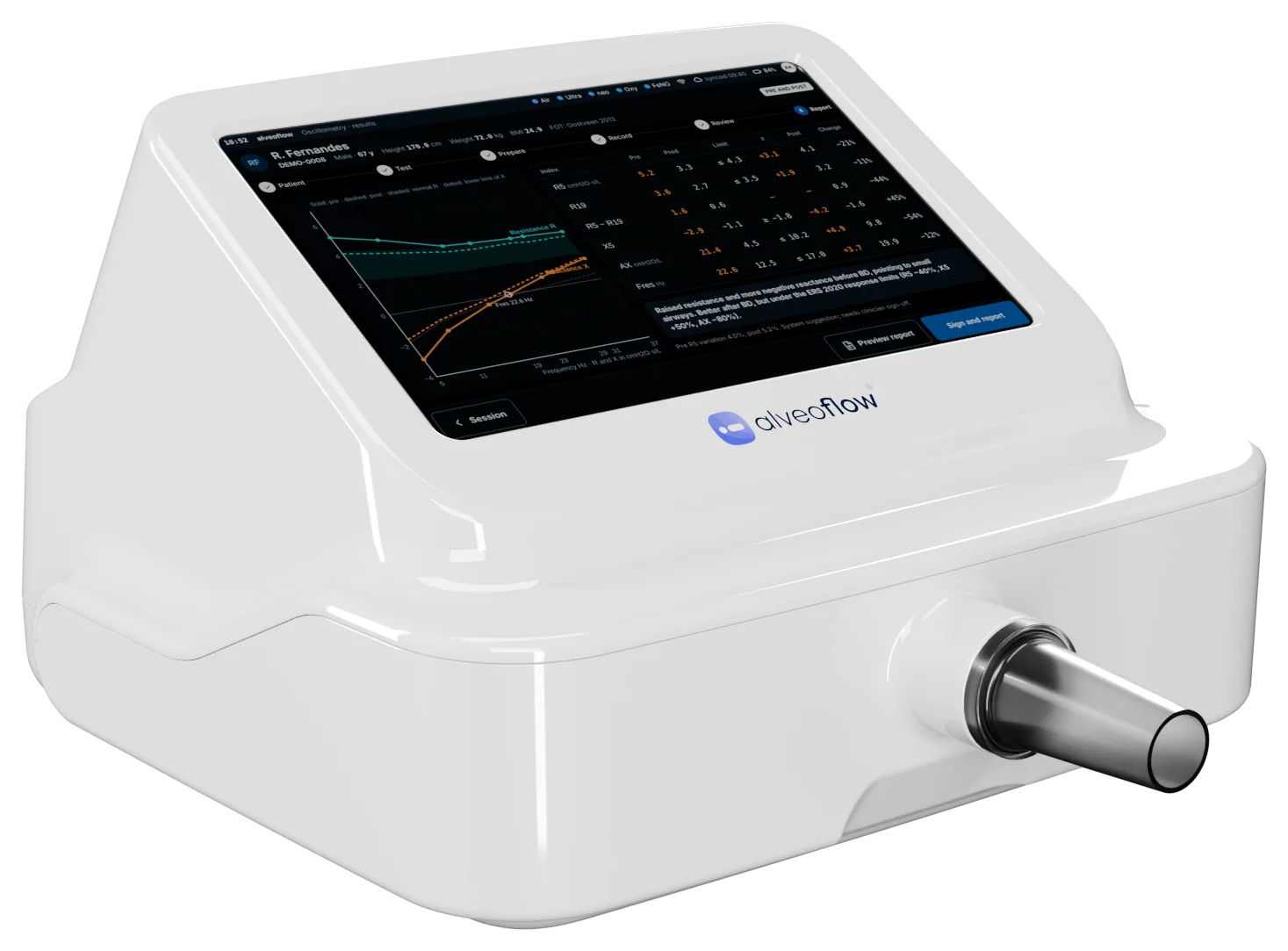
Resistance and reactance, side by side.
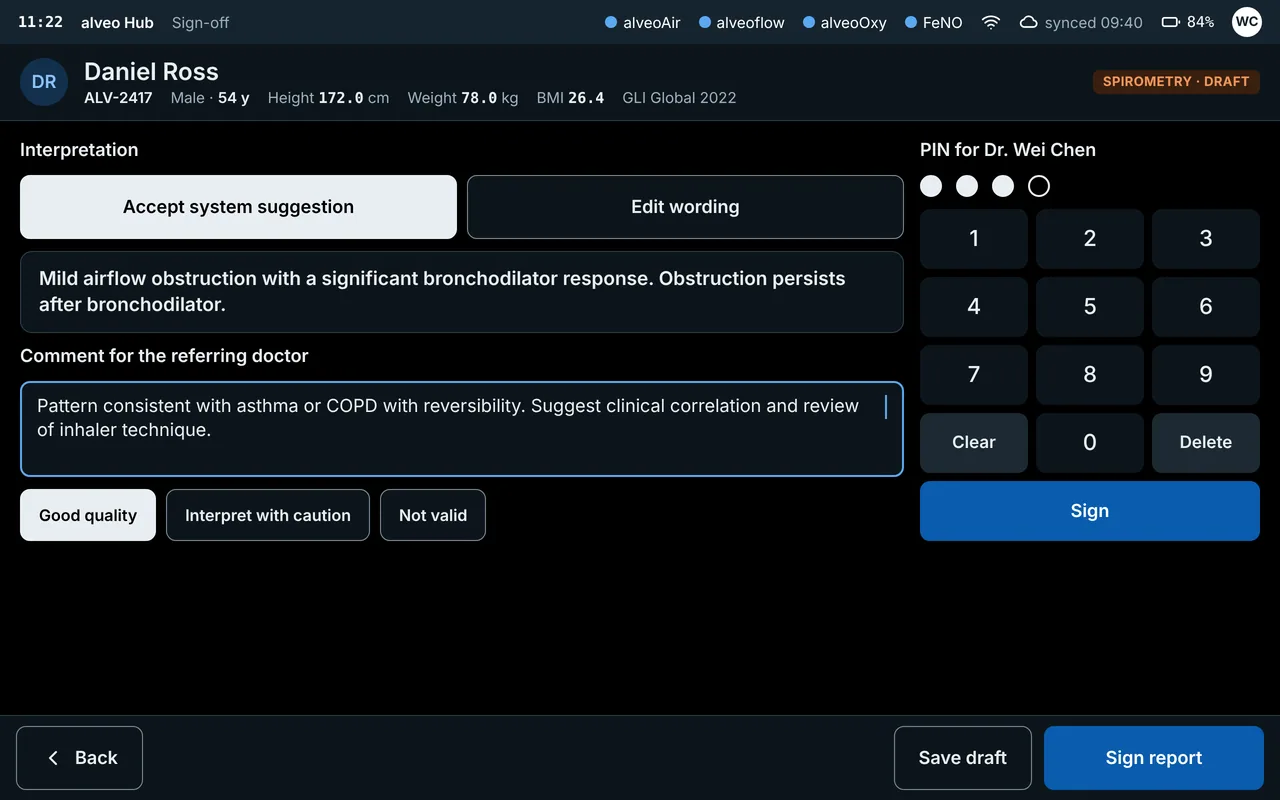
Results against reference values, ready to sign.
On the arm
Moves with the patient. Stays where you put it.
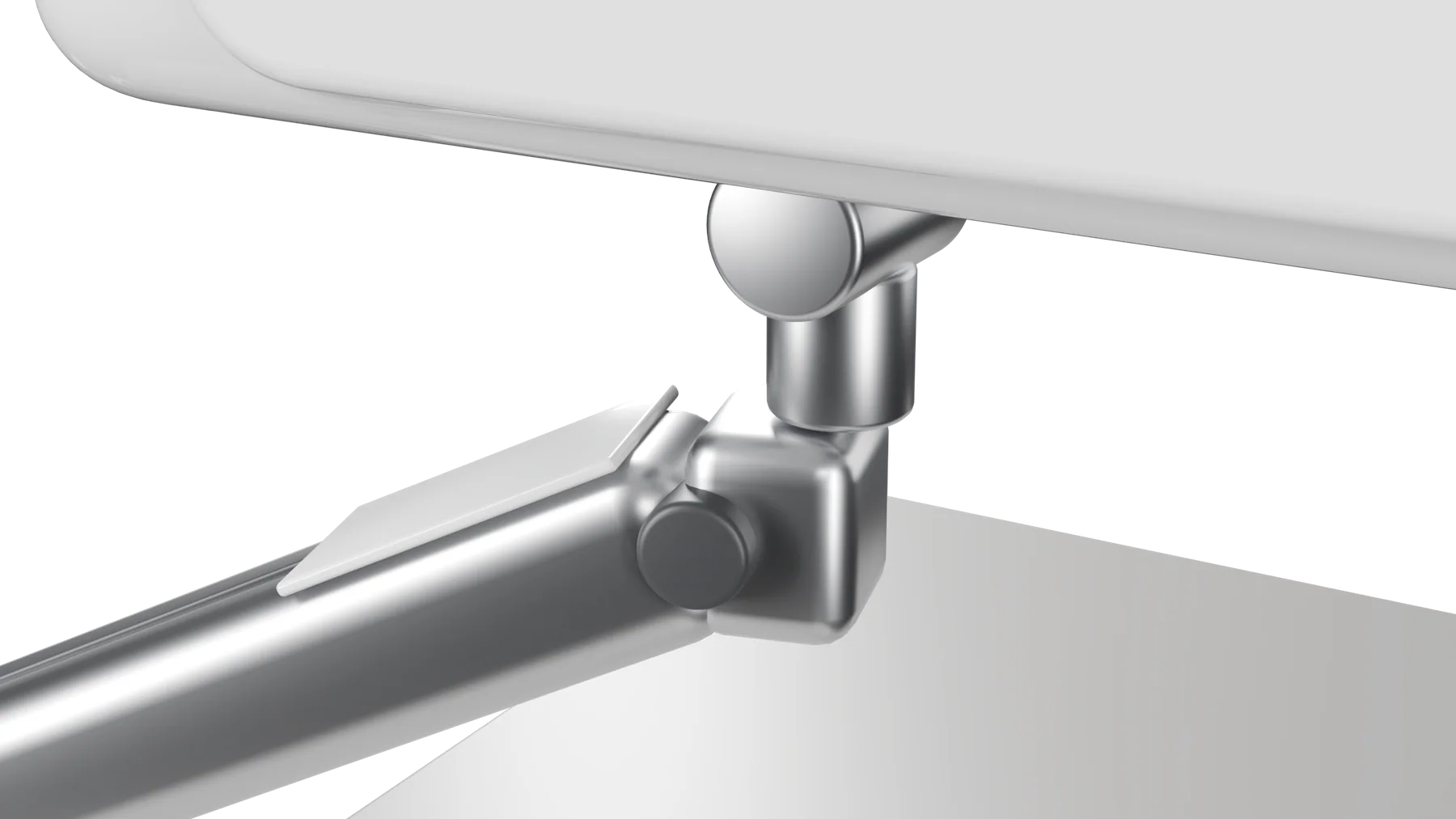
A gas-spring arm carries Pro's 3.4 kg on a standard VESA mount, so the screen reaches the patient instead of the patient reaching the screen.
From the first breath to the signed report.
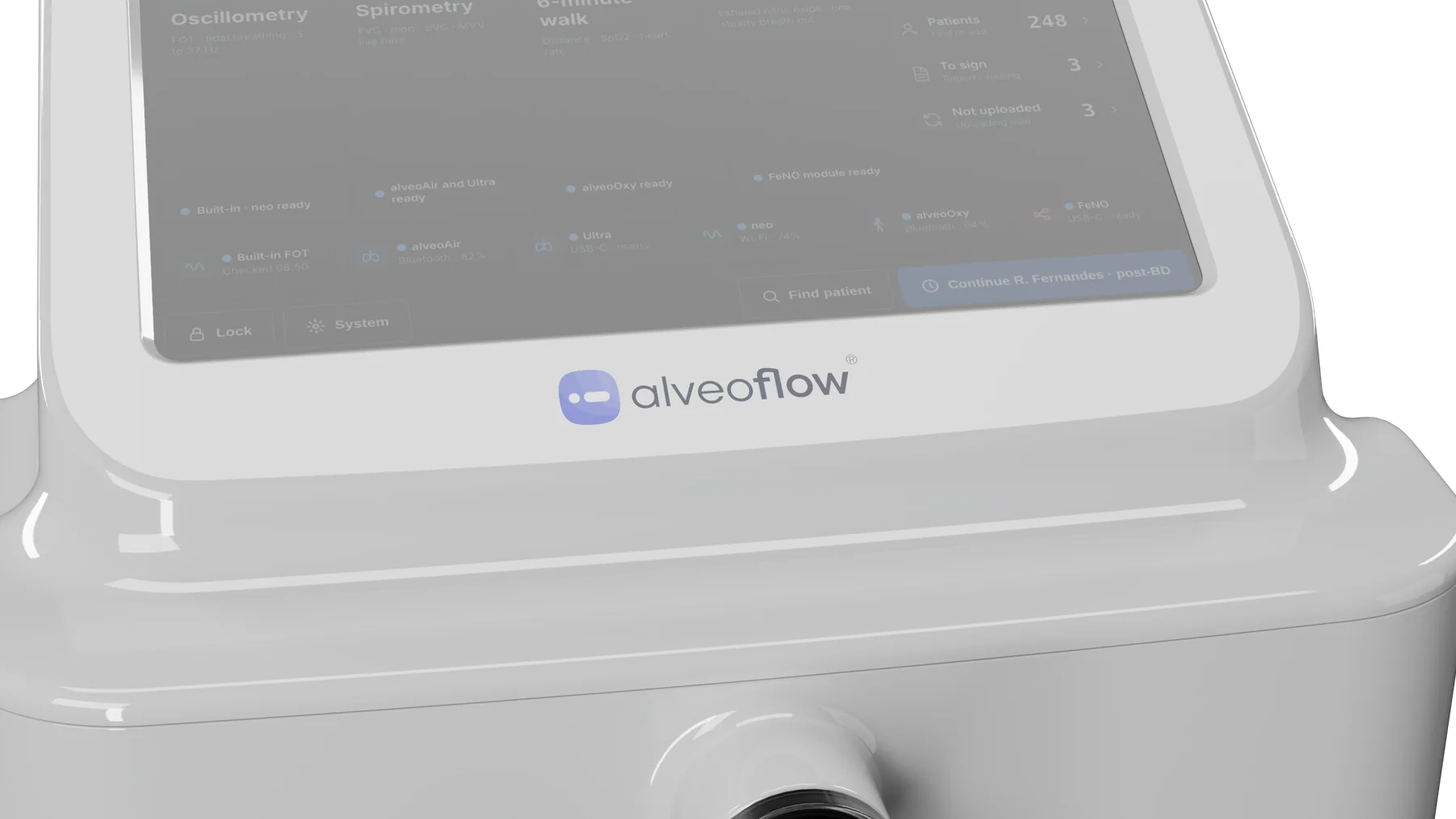
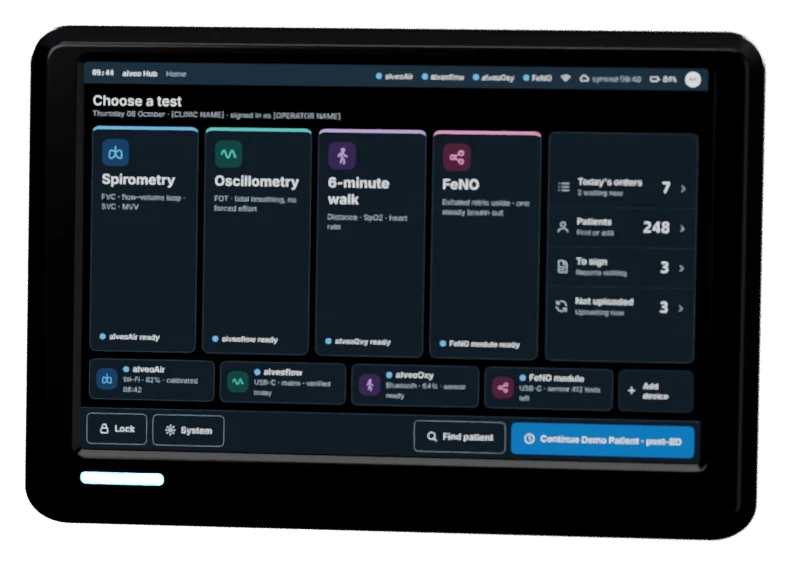
The same clinic software as the Hub, running on Pro's own screen.
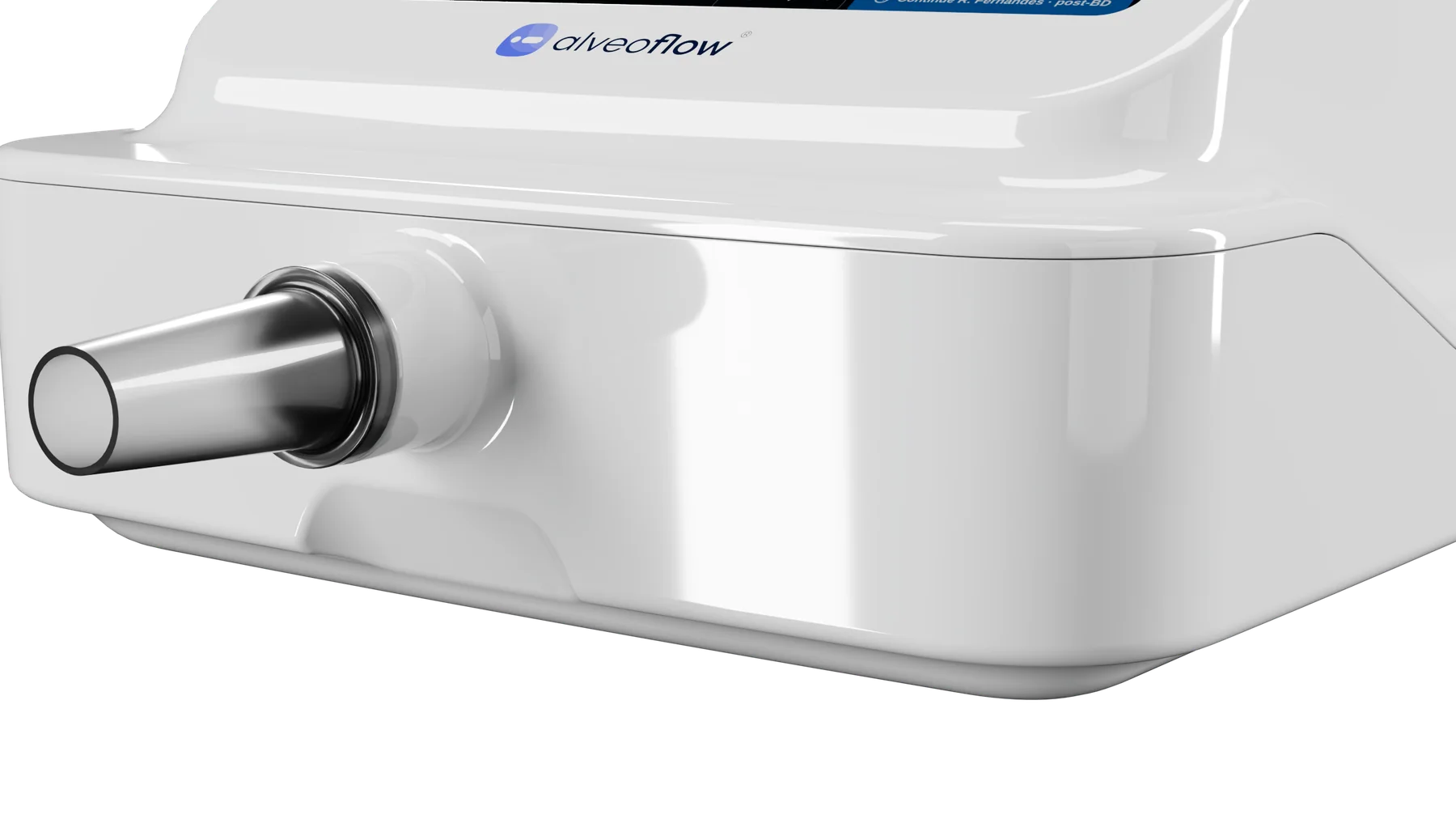
Take a closer look.
Better with alveo Hub
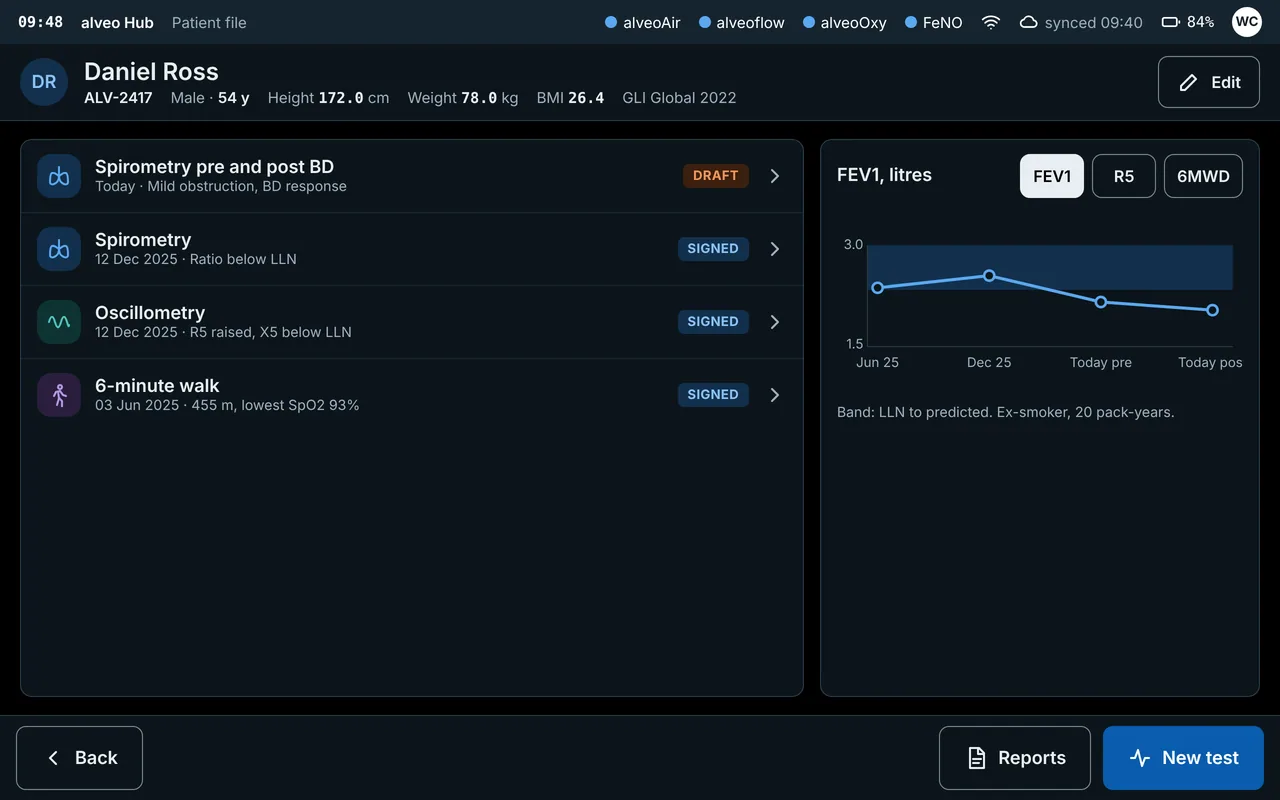
Pro results join every other test.
Oscillometry from Pro lands on the Hub in the same patient record as spirometry and the walk test. Works offline, and syncs to alveoConnect when you are online.
FOT oscillometry
Forced oscillation technique (FOT) testing with alveoflow Pro
alveoflow Pro is a clinic oscillometry device. It measures lung function with the forced oscillation technique (FOT), also called oscillometry: small pressure waves at 5–40 Hz are sent into the airways while the patient breathes normally.
Because there is no forced blow, FOT suits children, older adults and patients who cannot perform spirometry reliably. The difference between resistance at 5 Hz and 20 Hz (R5–R20) is widely used to look at small airway function.
Questions clinicians ask
What is FOT (forced oscillation technique)?
FOT, or oscillometry, measures how the airways resist and store pressure waves during quiet breathing. It reports resistance (R5, R20), reactance (X5), reactance area (AX) and resonant frequency (Fres).
How is FOT different from spirometry?
Spirometry needs a maximal forced exhalation and good coaching. FOT uses normal tidal breathing for 15–30 seconds, so the result depends far less on patient effort. Many clinics use both: alveofit's alveo Hub combines them in one patient record.
Is FOT the same as impulse oscillometry (IOS)?
Both are oscillometry. Impulse oscillometry uses short pressure impulses; alveoflow Pro uses a multi-frequency oscillation signal across 5–40 Hz. Both report resistance and reactance at similar frequencies.
Which standards does alveoflow Pro follow?
Testing follows the ERS technical standard on respiratory oscillometry (King et al., 2020). The device is designed to IEC 60601-1, IEC 60601-1-2 and IEC 60601-1-11, with ISO 10993 biocompatibility, and is CDSCO Class B.
Tech specs
- Method
- Forced oscillation technique, multi-frequency, 5–40 Hz
- Parameters
- R5, R20, R5–R20, X5, AX, Fres, with z-scores or fixed cut-offs
- Display
- 10.1-inch capacitive colour touchscreen
- Works with
- alveoflow Neo, alveoAir Ultra, alveoConnect
- Mounting
- Desk, or articulating arm on VESA 75 / 100
- Arm
- Gas-spring arm, 110 to 520 mm reach, tilt +90° / −25°, swivel ±90°, 2 to 9 kg, desk clamp or grommet
- Weight
- 3.4 kg (device)
- Size
- About 317 × 377 × 204 mm
- Interoperability
- FHIR R4 and HL7 v2 export2
- Regulatory
- CDSCO Class B, MDR 2017. IEC 60601-1, IEC 60601-1-2, IEC 60601-1-11. ISO 10993. RoHS. FCC.